In early February of this year, Fritz and I took a trip to Mexico City, a place we have visited many times and one we love for many reasons. On the Friday we left New York, the weather in the city was about to break a record for the coldest day since keeping records. It seemed we had booked our Mexican getaway with precision timing. The forecast predicted 55-80 degree sunny days for the duration of our trip.
Day One:
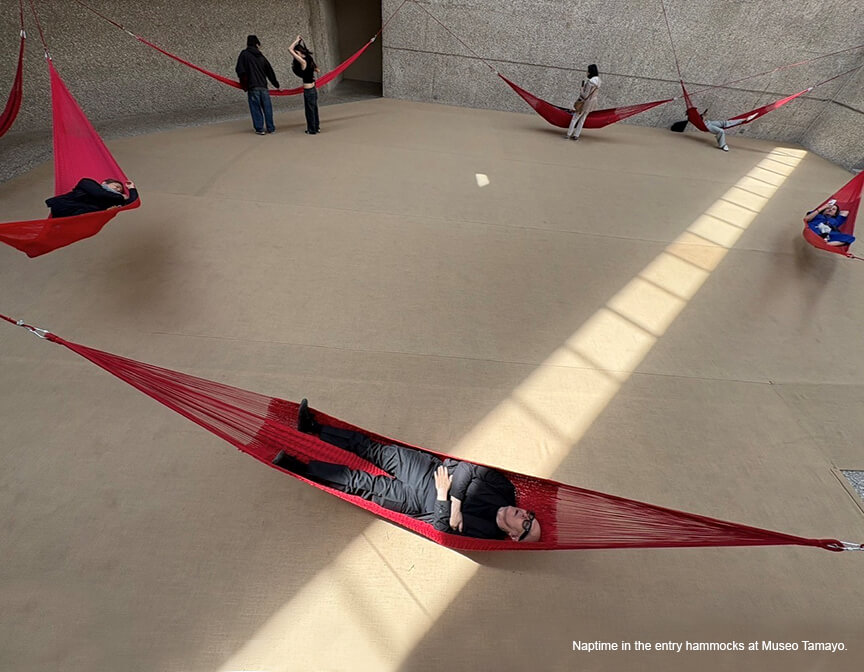
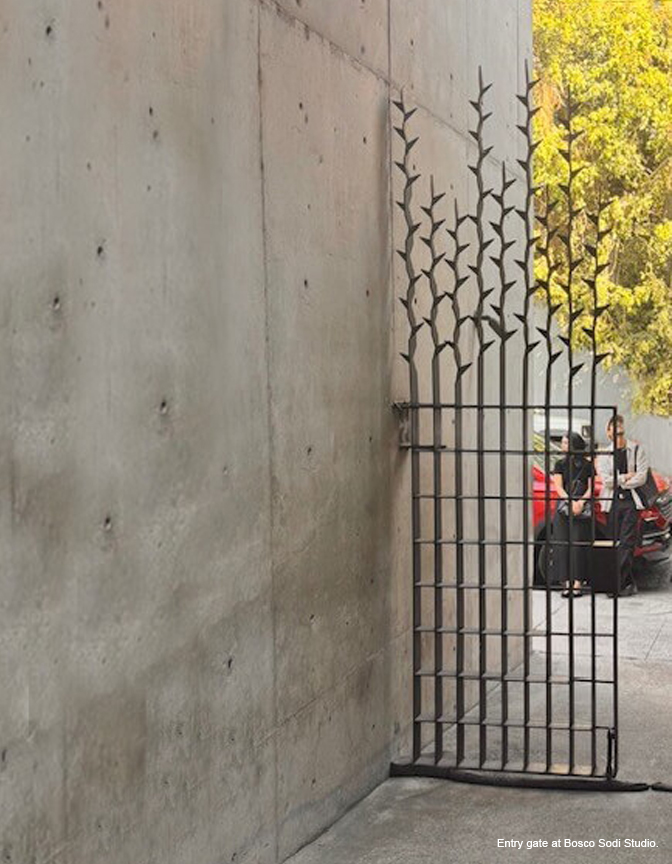
Our early-morning flight got us to Mexico City before noon, giving us almost the entire day. Our first stop was ZsONA MACO, Latin America’s most important contemporary art fair with 200 galleries from 27 countries. After taking in the main event, we found our way to the open studio of renowned Mexican artist Bosco Sodi. His surprisingly large studio is a contemporary Brutalist concrete structure. My favorite detail was the wrought iron entry gates abstractly conceived as shafts of wheat. We ended our day at another Brutalist concrete structure, the Museo Tomayo. Much to my delight, the main entrance space has an ample number of elegant red hammocks suspended from the interior walls where visitors can stop to rest. I had been up since 3am to catch my 6 o’clock flight, so I took advantage of the opportunity with a five-minute snooze which was just enough time for me to reboot, so that I could fully enjoy the rest of the museum. Thank you, Museo Tomayo for accommodating my siesta.
Day Two:
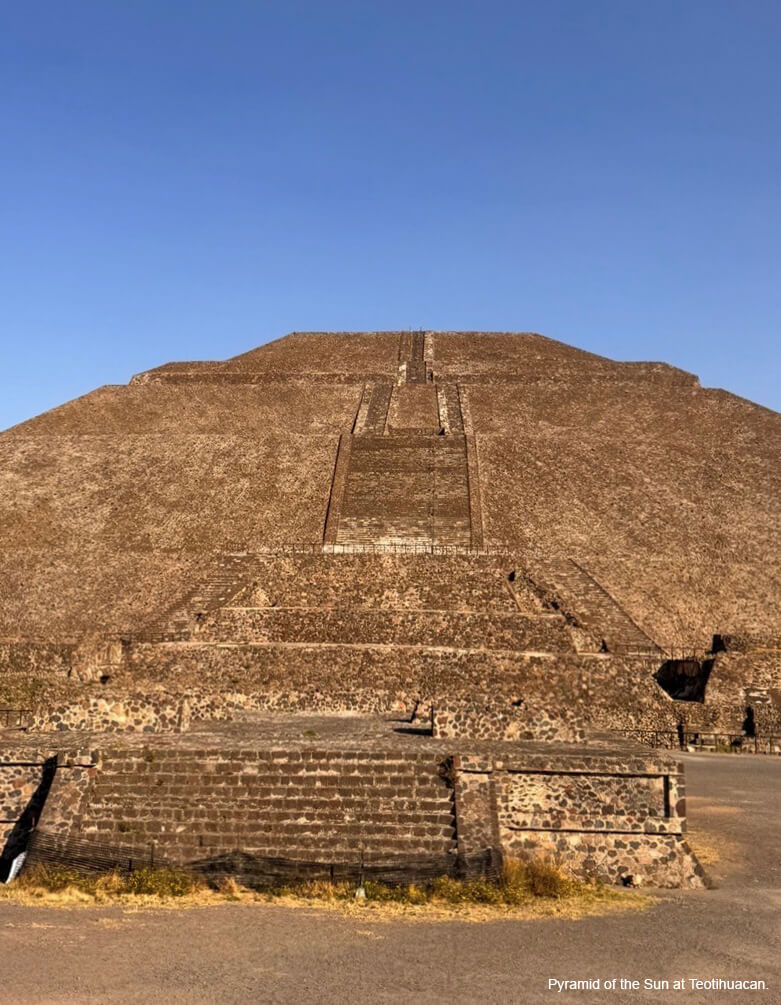
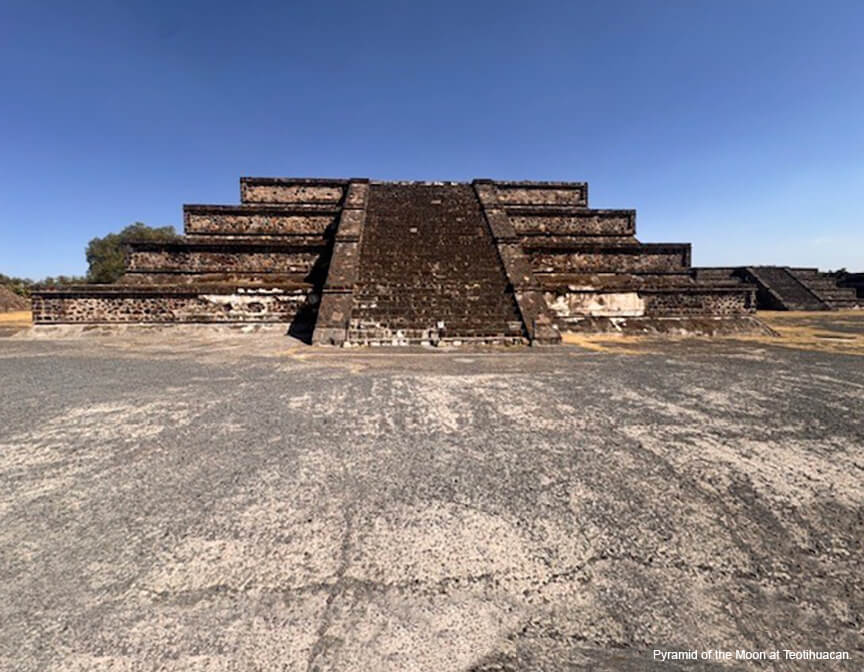
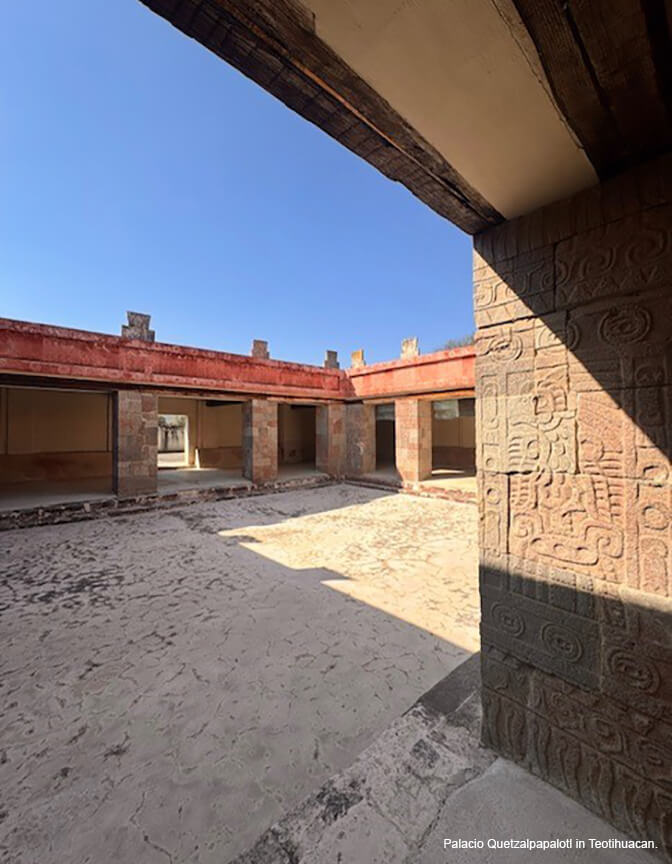
For our second day, we made the trek out to the pyramids of Teotihuacán, located a little over 25 miles northeast of Mexico City. It is impossible to put into words the effect these ancient grounds had on me. The Avenue of the Dead, The Pyramid of the Sun and The Pyramid of the Moon left me in awe as I pondered the intelligence, artistry and ultimate impact that these monuments in their time-worn state possess.
The venture took the better part of the day, but the chance to see these monuments again made the trip worthwhile. Back in the city, we ended the afternoon delightfully at Blanco Colima, one of La Condesa’s elegant restaurants.
Day Three:
Our first stop of the day was Casa Ortega, the home of prominent Mexican architect Luis Barragán, that he designed for himself and lived in for five years. It was purchased by the Ortega family who still own it today. Left intact, it is open to the public as an important example of one of Barragan’s more significant works. This tour was fascinating on two levels: 1) what an early vision of Barragan’s work—what has been called a laboratory of experiments—was like, and 2) how a family can adapt themselves into a highly customized home that was originally tailored to a very particular and eccentric bachelor.
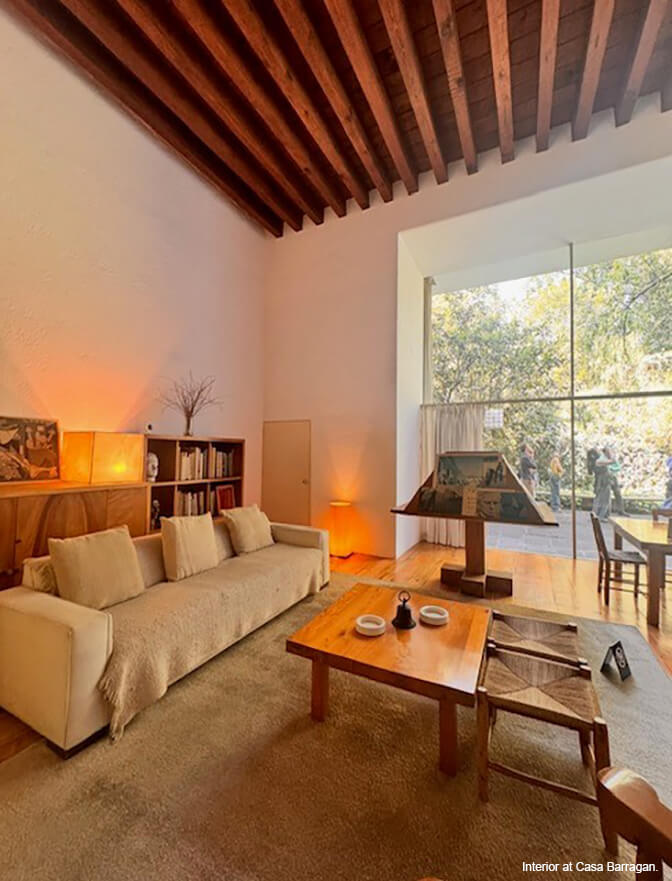
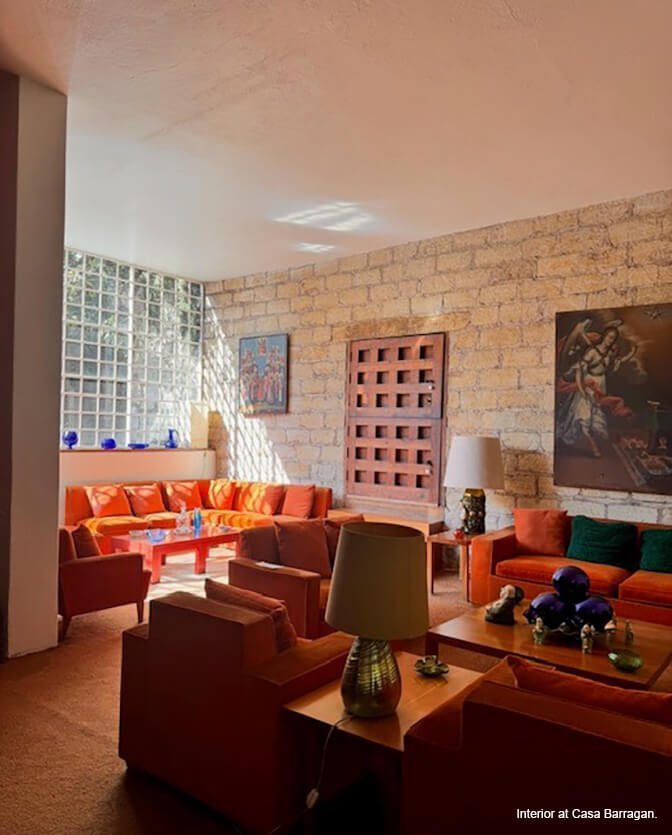
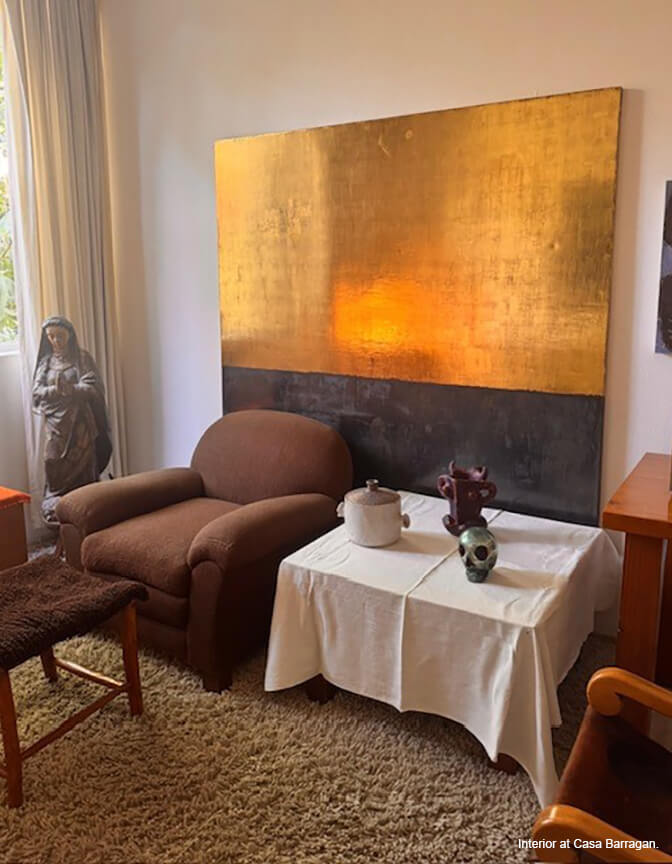
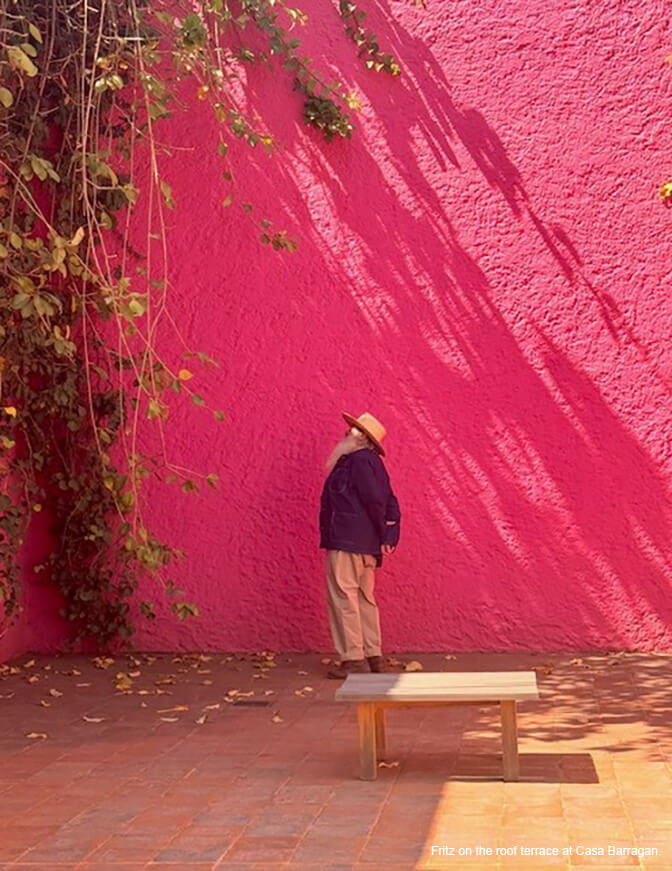
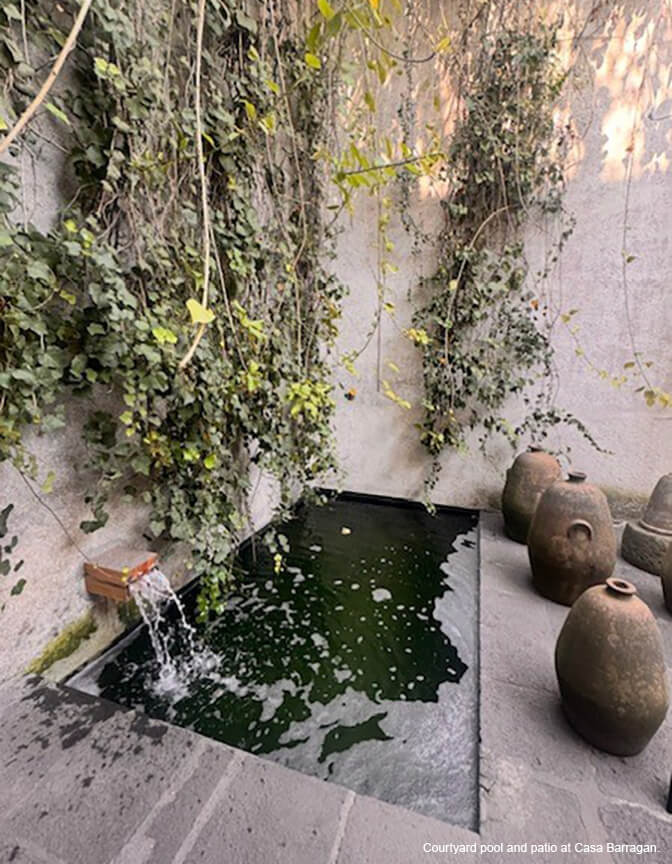
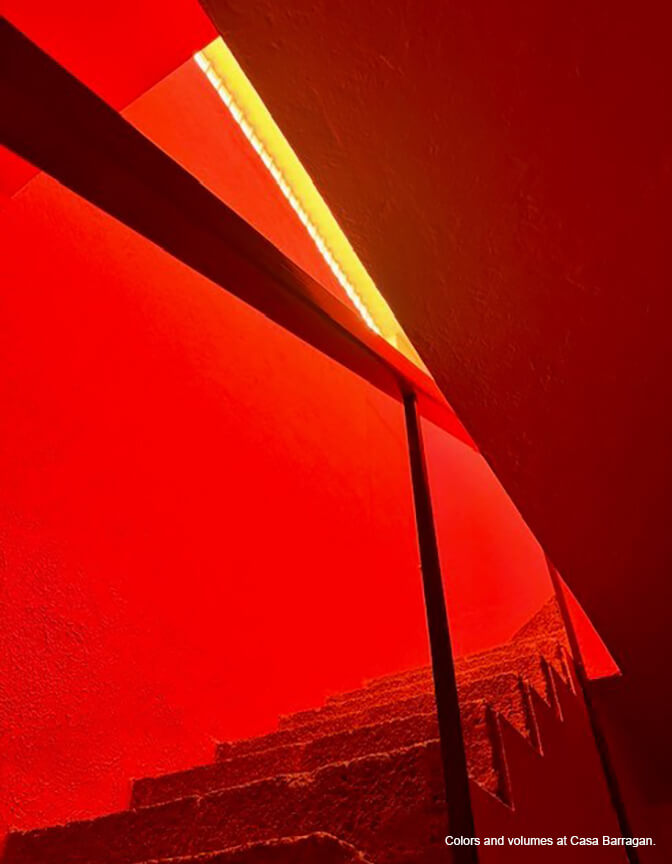
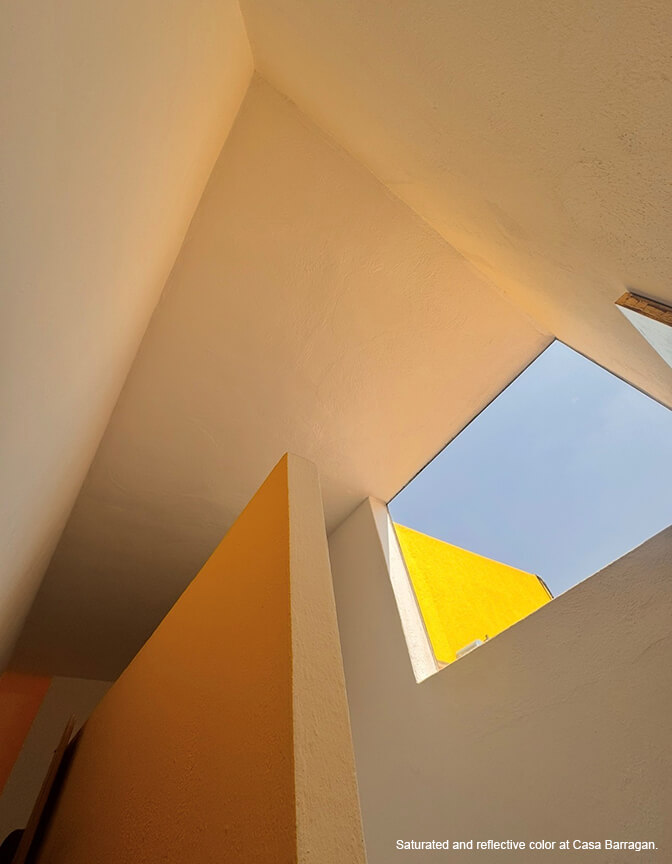
Barragán’s final home and studio just down the street—Casa Luis Barragán—which is now a UNESCO World Heritage Site was our next stop. To stand inside these spaces is to understand viscerally why Barragán is such an important architect. His mastery of color, light and texture as experienced through the prism of his time and culture has the ability to renew one’s faith in the power and glory of transcendental architecture. I had the distinct impression that I was absorbing brilliant passages from an intoxicating biography while walking through this house. The impressions are that personal and that loaded with meaning. To tour this home is to get to know this very enigmatic architect and artist just a little bit better.
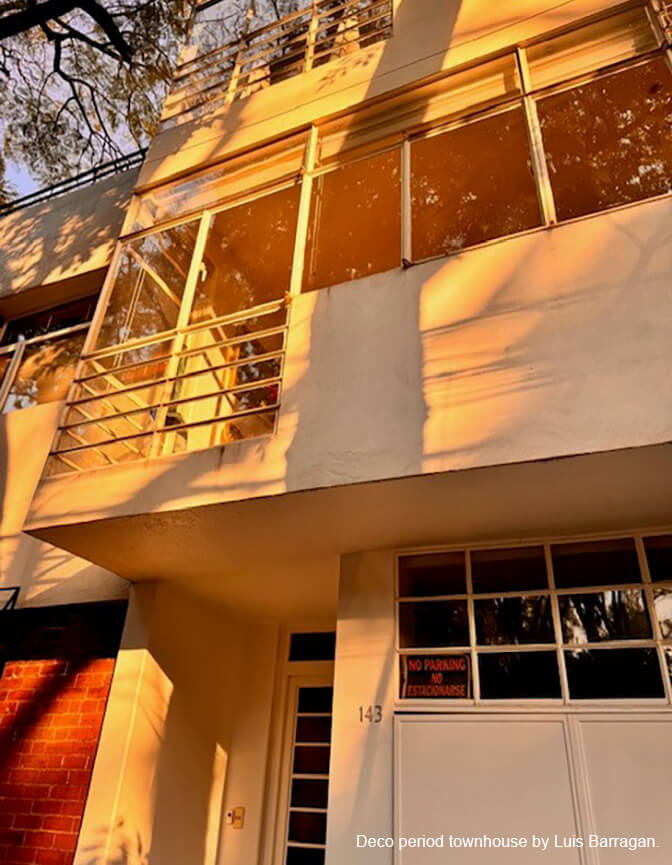
From there, we wandered through the Colonia Condesa neighborhood, admiring its Art Deco residential buildings, several of them attributed to Barragán. We ended this day at Botánico which is a dazzlingly charming indoor restaurant that felt like dining in the middle of a dense jungle.
Day Four:
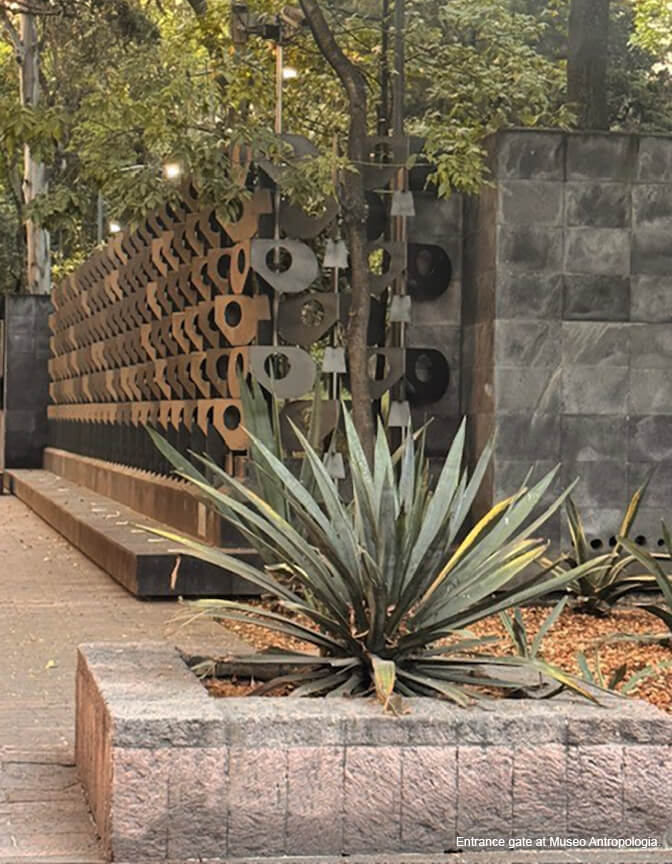
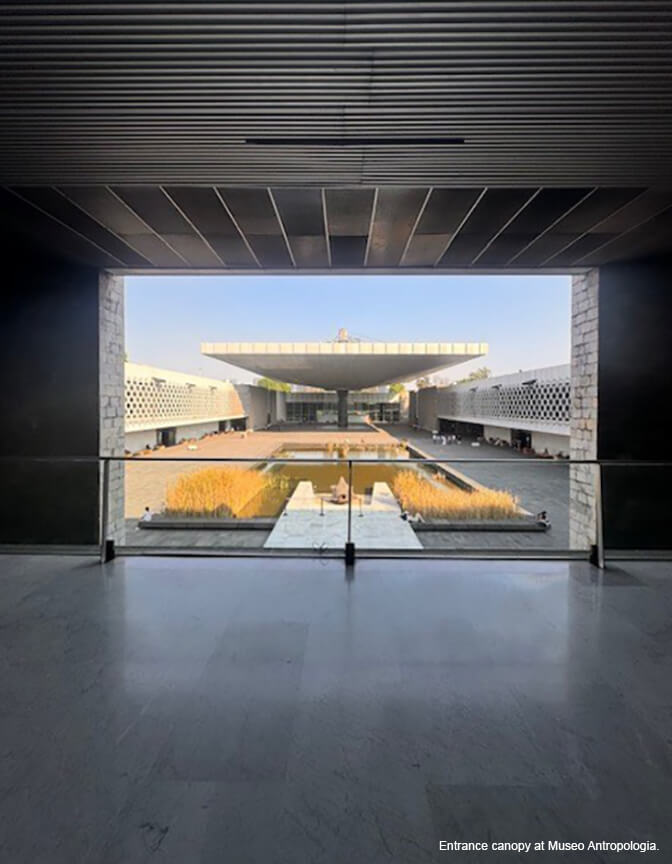
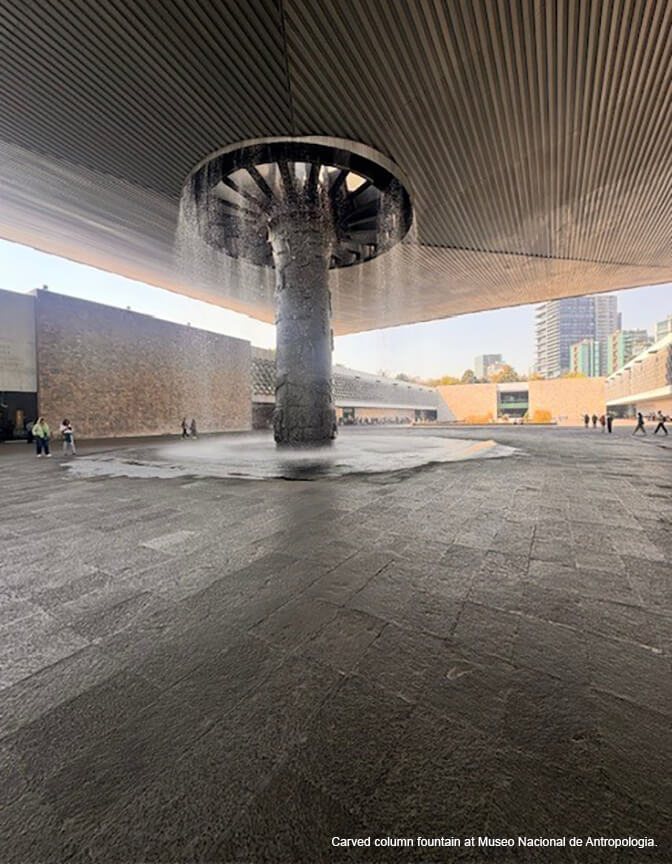
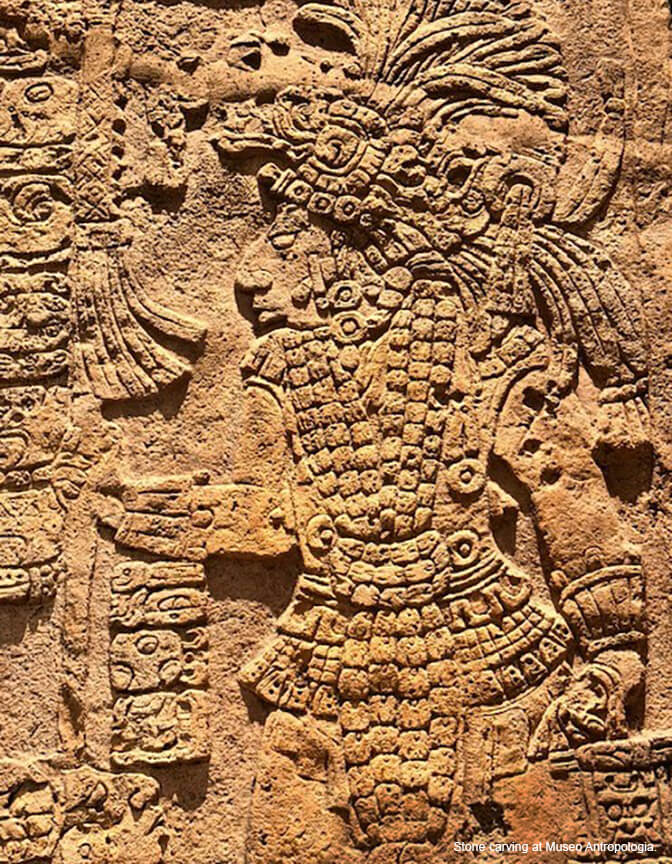
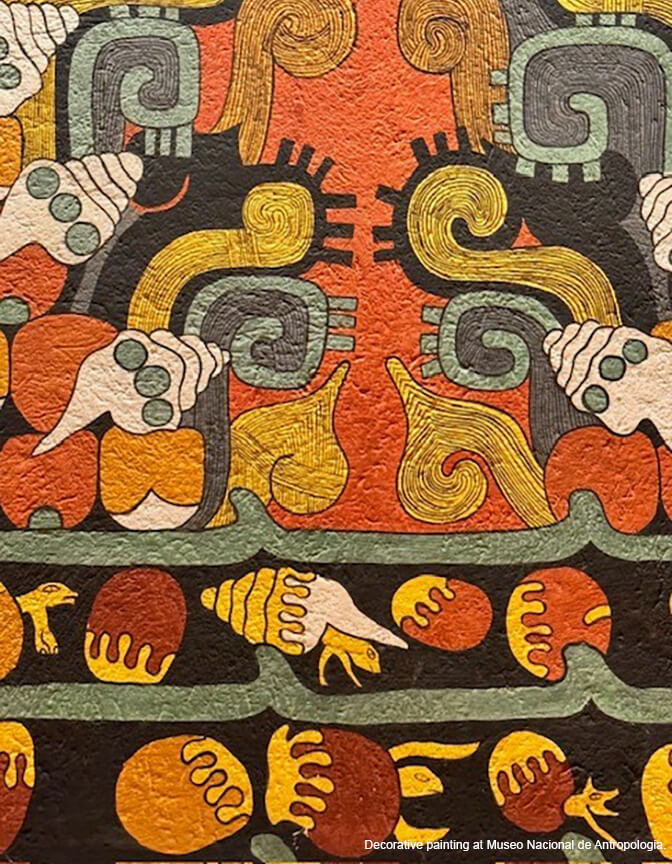
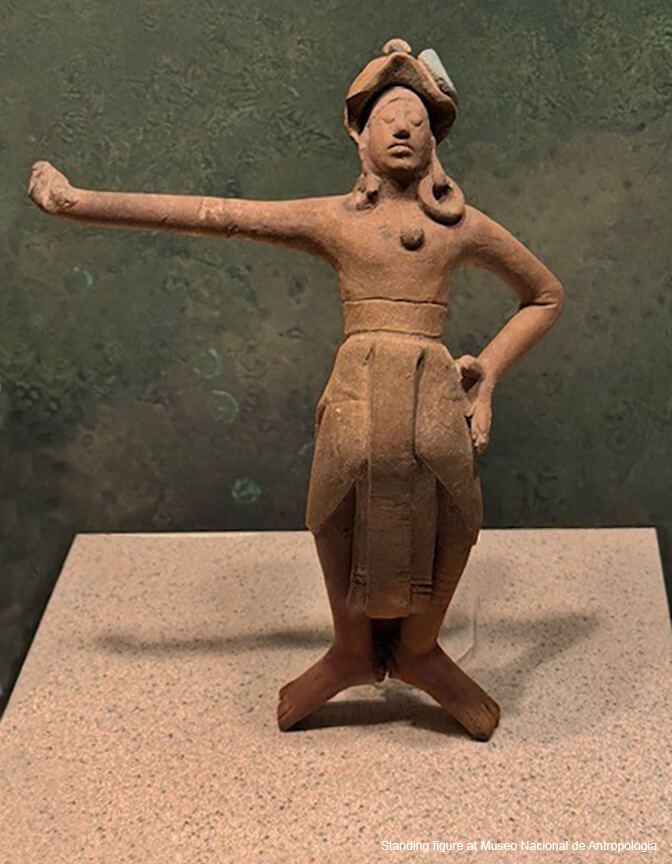
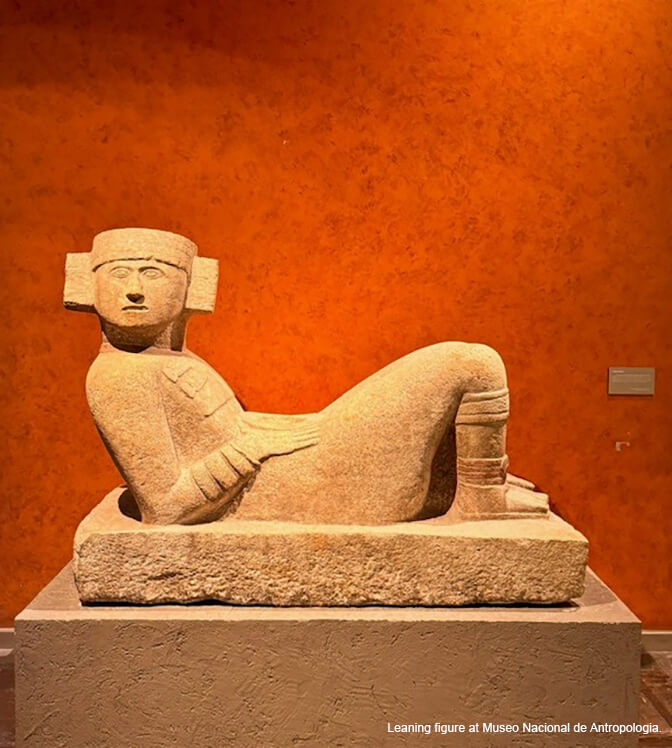
We began this day at the Museo Nacional de Antropología. After getting tickets and watching an orientation film, one is ushered into the immense courtyard. At the entry end is an extremely large canopy supported by a large, tall, round carved column with a curtain of water flowing from the top, evoking the idea of discovery that can come from dredging objects from a large body of water like the lake Mexico City was built on top of. The museum’s collections are staggering in their breadth. They include architectural fragments, household objects, ceremonial garments, agricultural tools, statues and masks, as well as scaled models of ancient urban centers and an inexhaustible archive of everyday life from every major pre-Columbian culture. The way these collections are organized contextualizes the region’s history in the most engaging way.
After a full day at the museum, we returned to Blanco Colima in La Roma for dinner. The patrons were very chic and the cuisine was delicious. As the hours passed by, we found ourselves intoxicated with Mexico City nightlife.
Day Five:
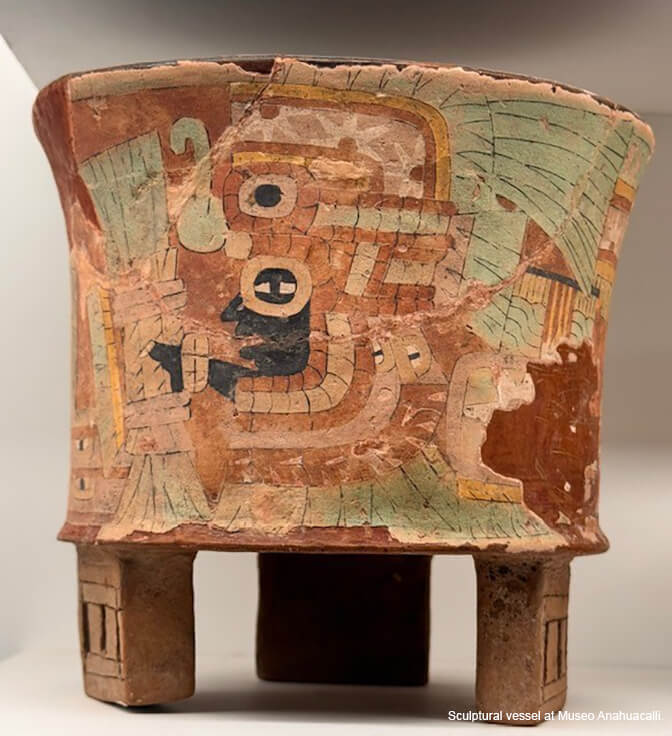
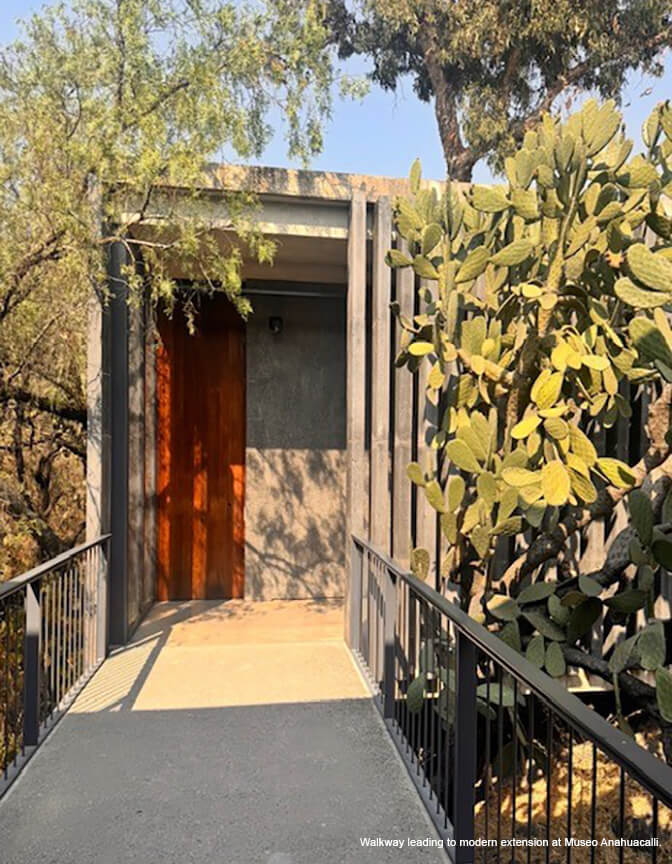
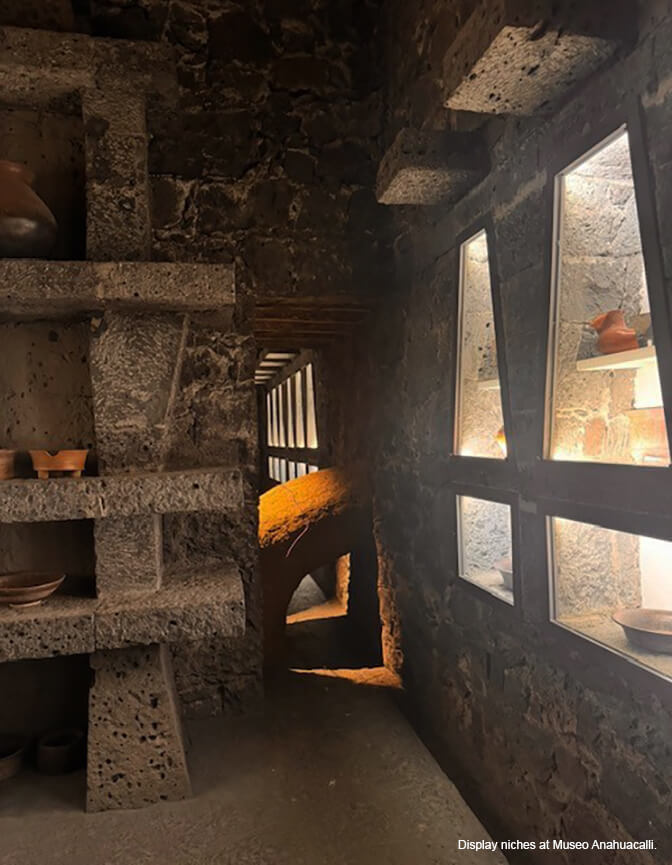
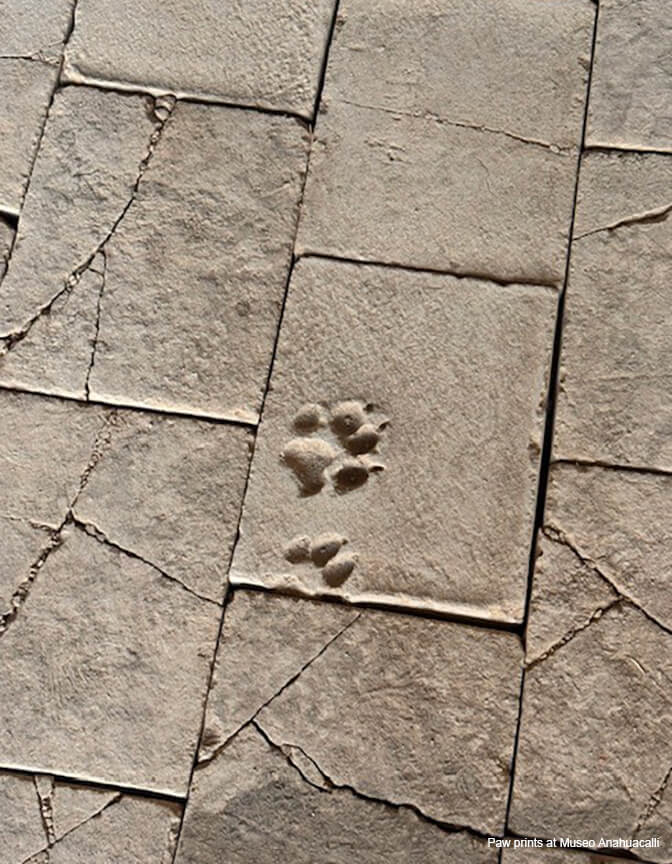
The morning brought us to the Museo Anahuacalli, conceived and built by Diego Rivera and Juan O’Gorman as a permanent home for Rivera’s collection of over 50,000 pre-Columbian artifacts. It is without question one of the most remarkable museums in the world.
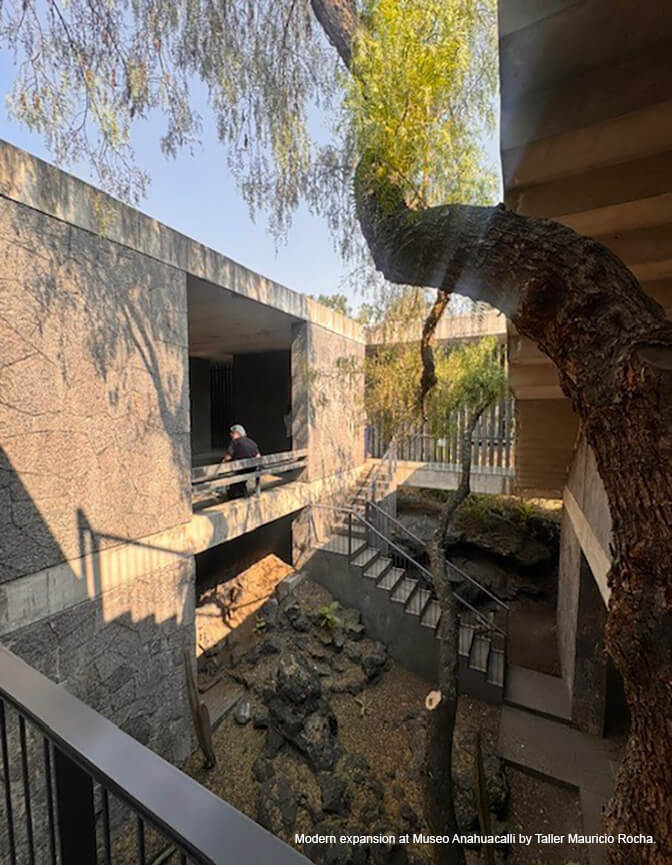
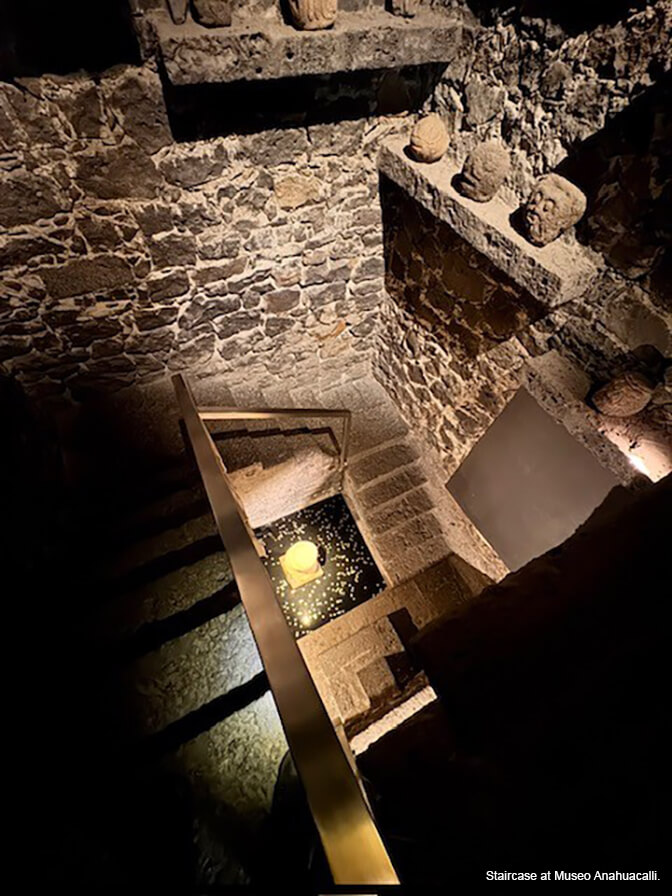
The structure draws its design vocabulary from Mesoamerican, Mayan and Toltec architecture. Walking through it, I felt as if I had traveled deep into the earth, seeing the relics as they are displayed—in a context that honors their strangeness rather than tames it.
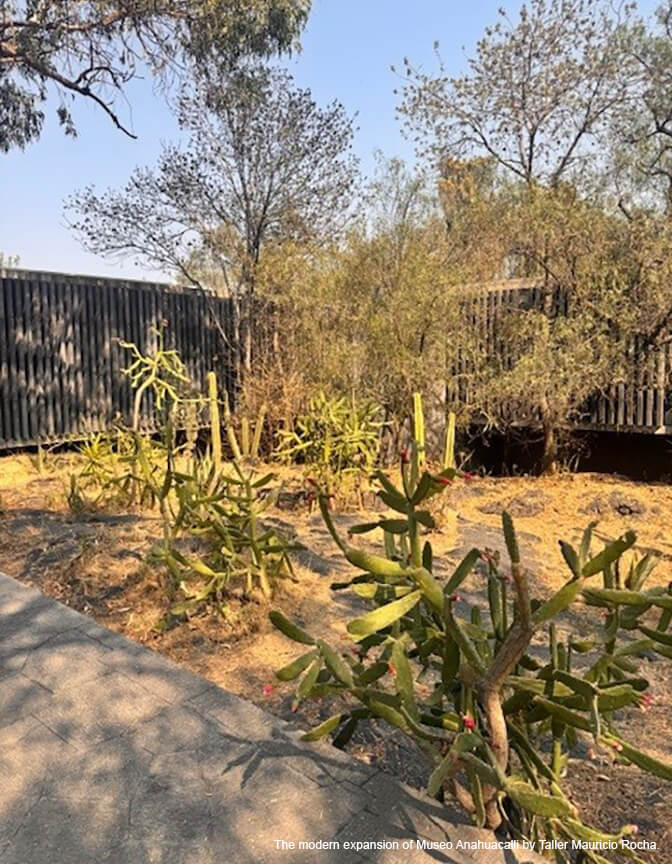
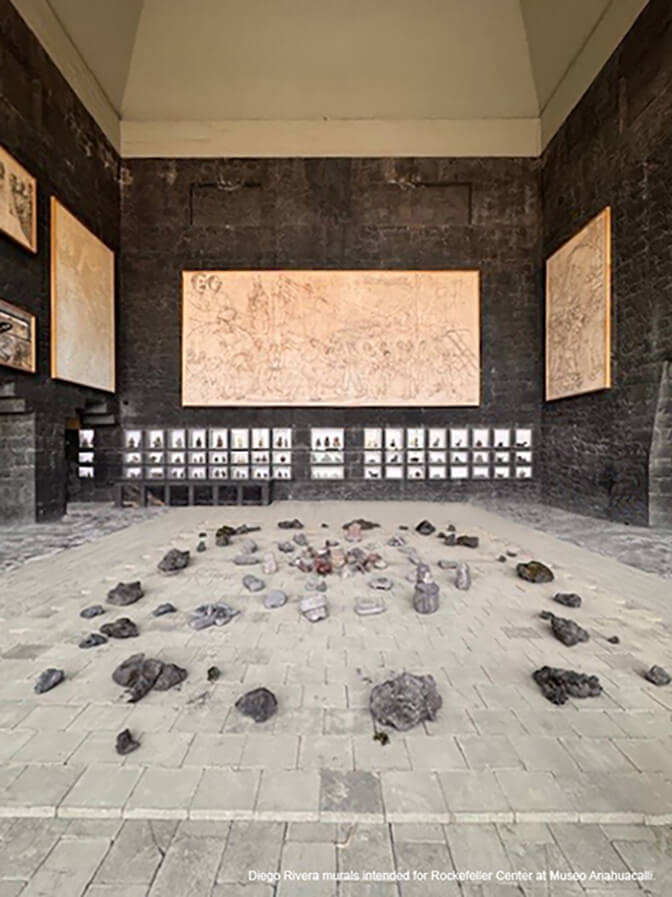
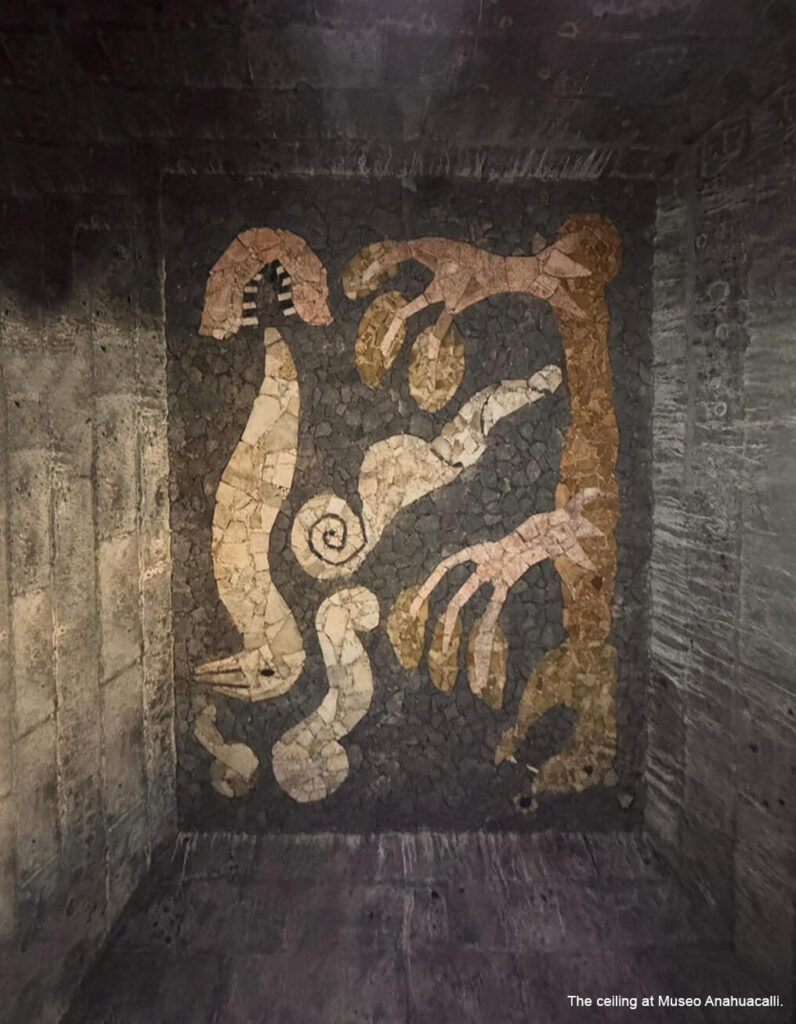
The primary building materials at Museo Anahuacalli are volcanic rock, alabaster (for the entry door and windows), glass and steel. Throughout the museum, the ceilings bear colorful mosaic murals, and on the light-filled second floor, oversized sketches and drawings of Diego Rivera’s mural, Man at the Crossroads which were intended for Rockefeller Center in New York line the walls. On the same grounds are new buildings beautifully landscaped and built of similar material in perfect harmony with the original structure.
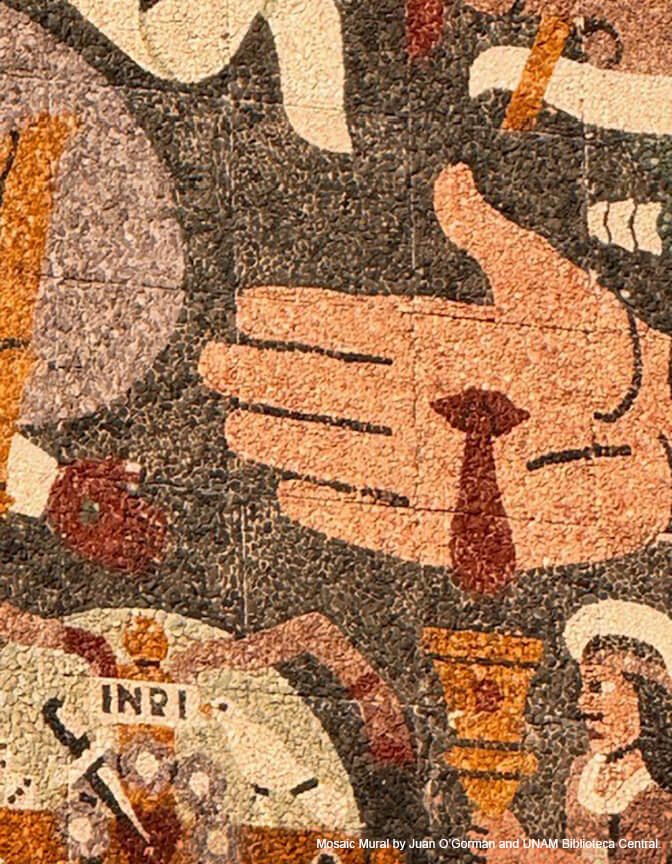
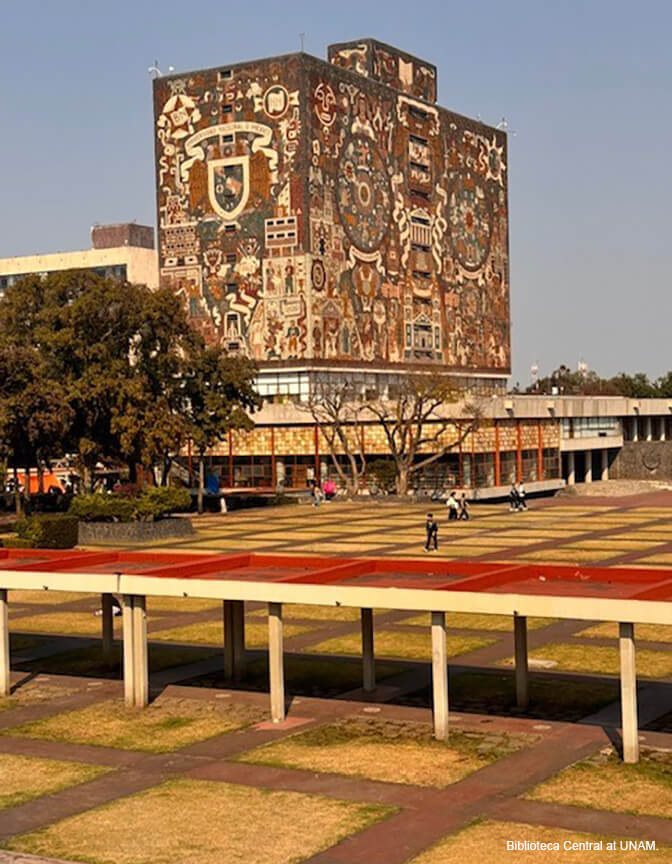
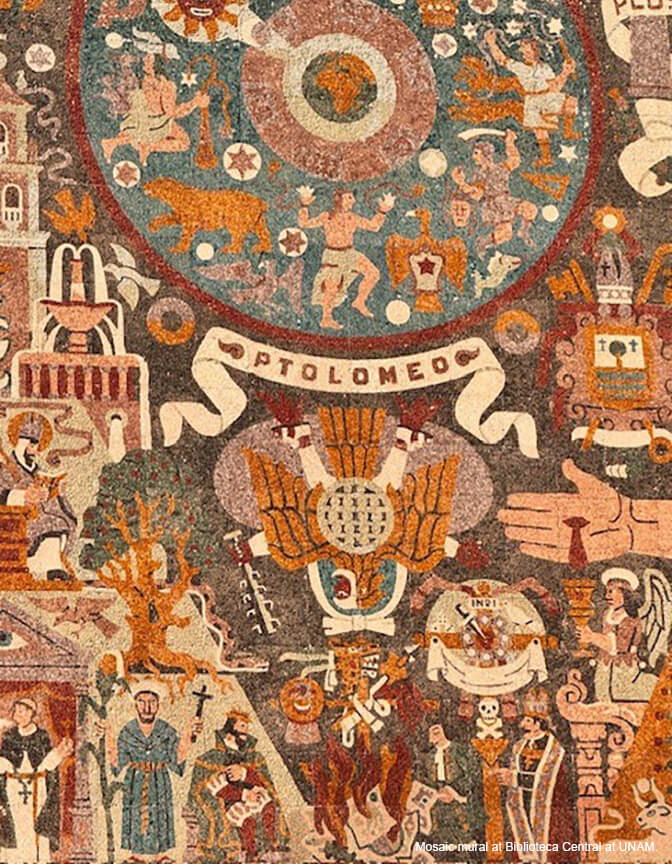
Our final excursion was to UNAM: Universidad Autónoma de México. I was most interested in seeing the central library which was yet another Rivera and O’Gorman collaboration. I first became aware of this building as a child seeing it in encyclopedias representing Mexico’s modernizing ambition. Most of the windowless part of the building is clad in mosaic stone depicting the region’s past as well as its aspirational promise of the future. When this building was completed in the mid-fifties, it was rightly understood as a revolutionary statement: the most prestigious university in Mexico announcing its modernity not through imported architectural language, but through the radical assertion of its own history.
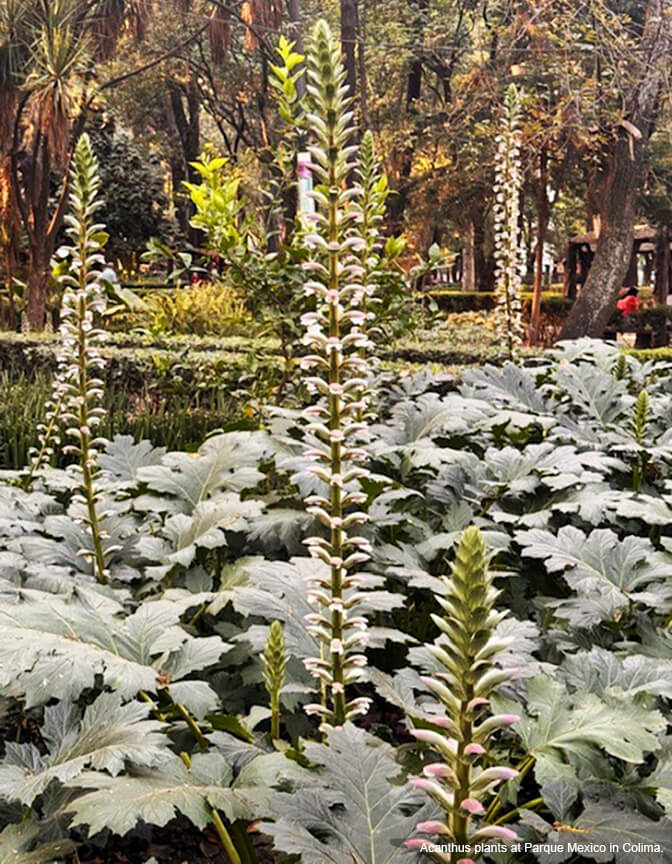
Mexico City is a city of almost incomprehensible historical density made up of layer upon layer of civilization, catastrophe, reinvention and creation; from the Aztec engineers who built the Tenochtitlan on a lake to the Spanish colonizers who dismantled and rebuilt it in stone, from the muralists who painted a nation’s identity onto its public walls to the contemporary architects, chefs and artists who today, are adding new chapters to a story that stretches back millennia. No single visit, however well-planned, however curious or attentive the traveler, can do it justice. And that, perhaps, is its greatest gift: the guarantee of return.