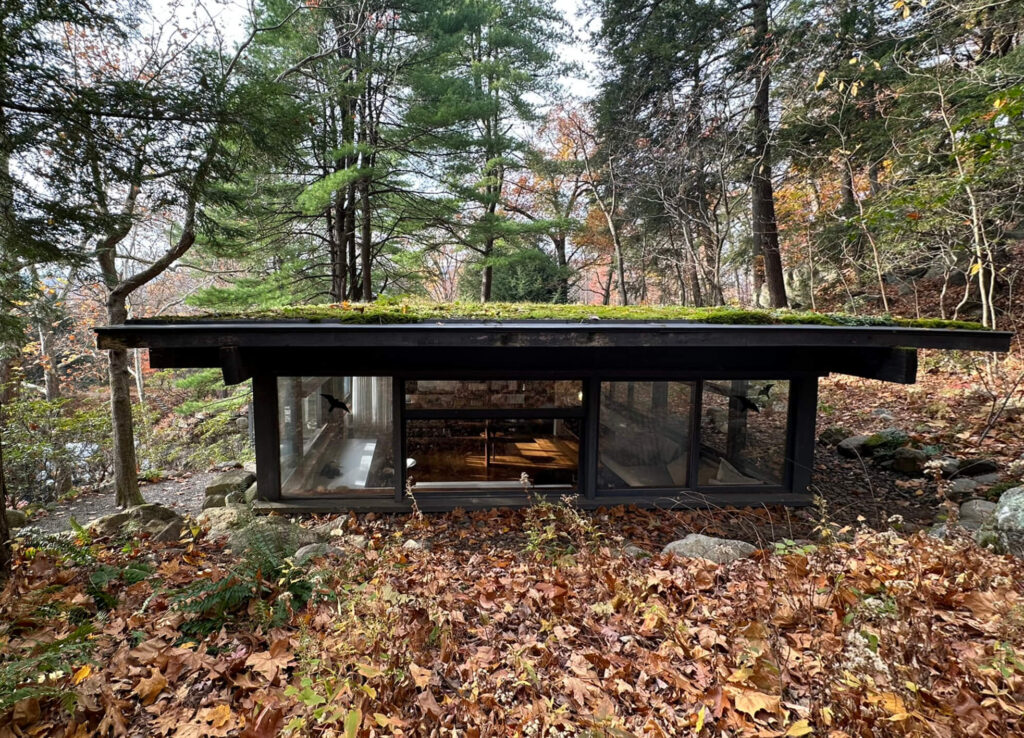
Dotted across the United States are countless historic modern houses. Palm Springs is known for its mid-century modern homes, there’s Fallingwater in Pennsylvania and Gropius House in Massachusetts. A bit closer, for those of us in NYC, there is Donald Judd’s studio and residence at 101 Spring Street in Soho and The Glass House by Philip Johnson in New Canaan, CT. A lesser-known site, and a name that might not be so familiar, is Manitoga / The Russel Wright Design Center, located in Garrison, NY. Manitoga is the house, studio and woodland garden of 20th century industrial designer Russel Wright, his wife and business partner Mary and their daughter Ann. The property, which is situated on 75 acres, was an abandoned quarry at the time of purchase in 1942. After construction of the house and studio, known as Dragon Rock, was completed in 1961, it became the family’s full-time residence.
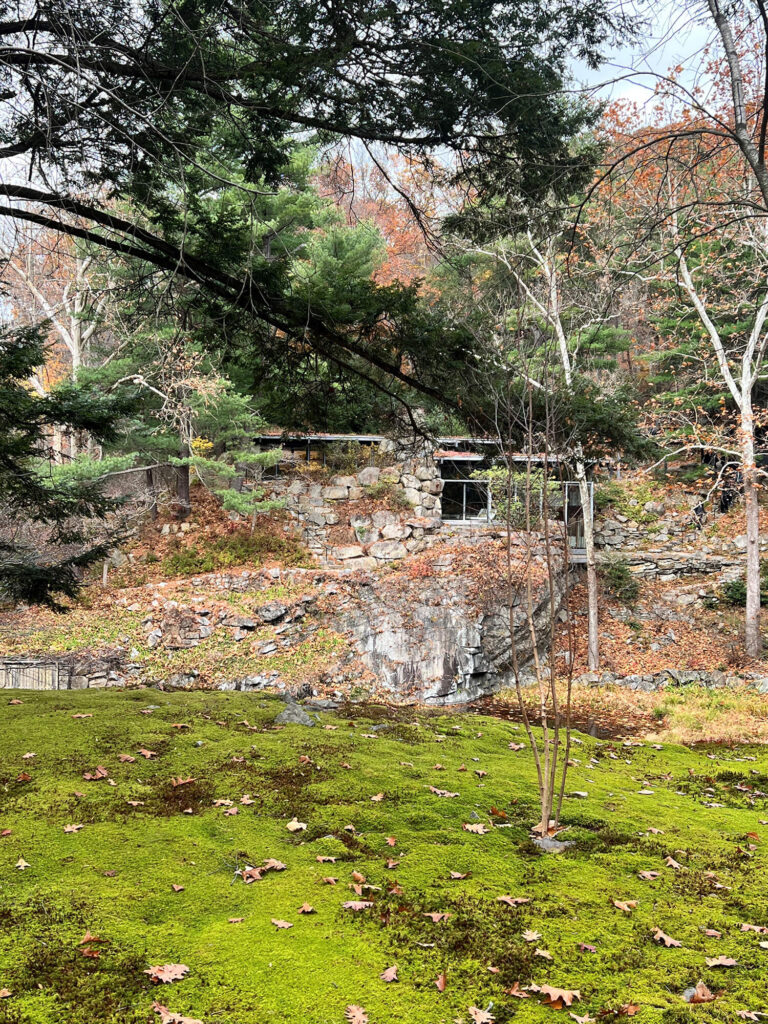
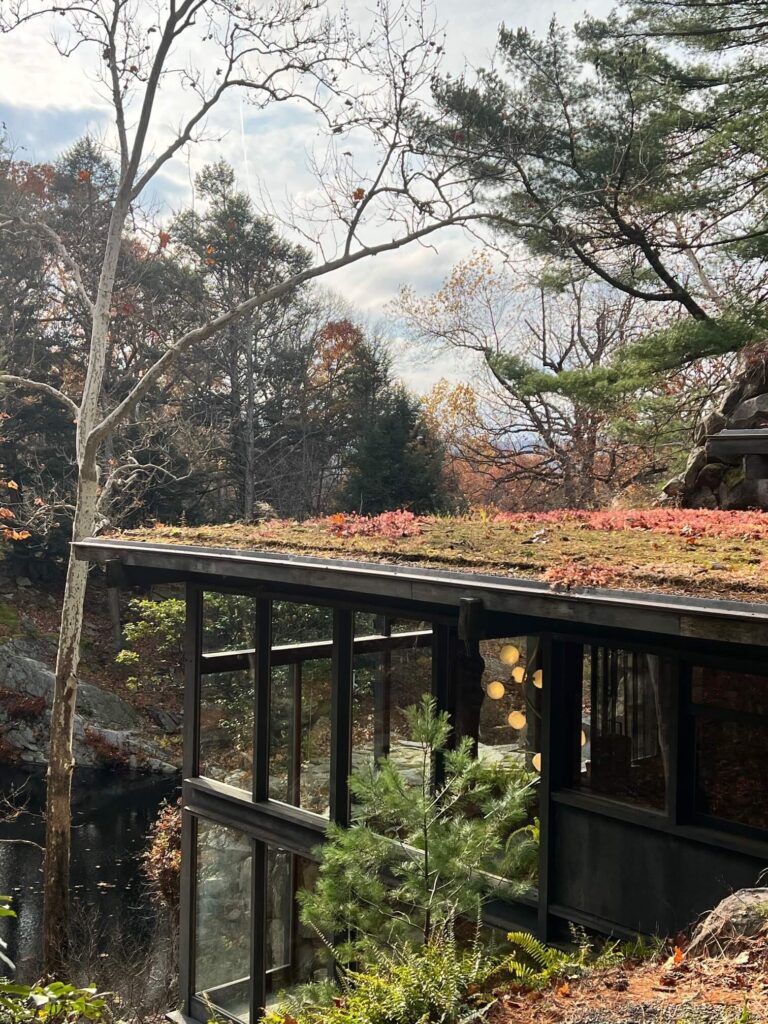
On a crisp autumn day last month, a group from MR was invited by our friends at R & Company with whom we have been working for over a decade, to visit Manitoga to see the exhibition of work by one of the artists they represent and whose pieces we have used in numerous projects—Jeff Zimmerman: Glass Light Nature. Arriving at the remote property, we made our way to the Guide House where we met our tour guide Rhiannon, who after a quick introduction, brought us to the start of a winding trail of rocky terrain that would lead us to Dragon Rock. Along the way, she encouraged us to feel the moss that carpets much of the ground in soft, bright green, and talked about Russel’s commitment, with inspiration from the Wappinger people, to restoring the land to its original landscape, in order to help others make sense of the “subtle and seemingly chaotic world of the Northeastern deciduous forest.” Manitoga, she told us, means Place of Great Spirit. From a mid-point on the trail, we stood directly across from the house, which is located on the quarry edge, built into the earth and nestled in the woods. It is clear, studying this view, that it was designed with intention, around a central theme of connecting nature with the architecture. At the end of the trail, at the top of the hillside, we stood above the quarry pool with its 30-foot waterfall, the modern house built primarily of wood, glass and stone just before us. At eye level, the roof, covered in lush sedum plantings was in perfect view. Lowering our gaze, we got a peak at the interior through the façade of glass.
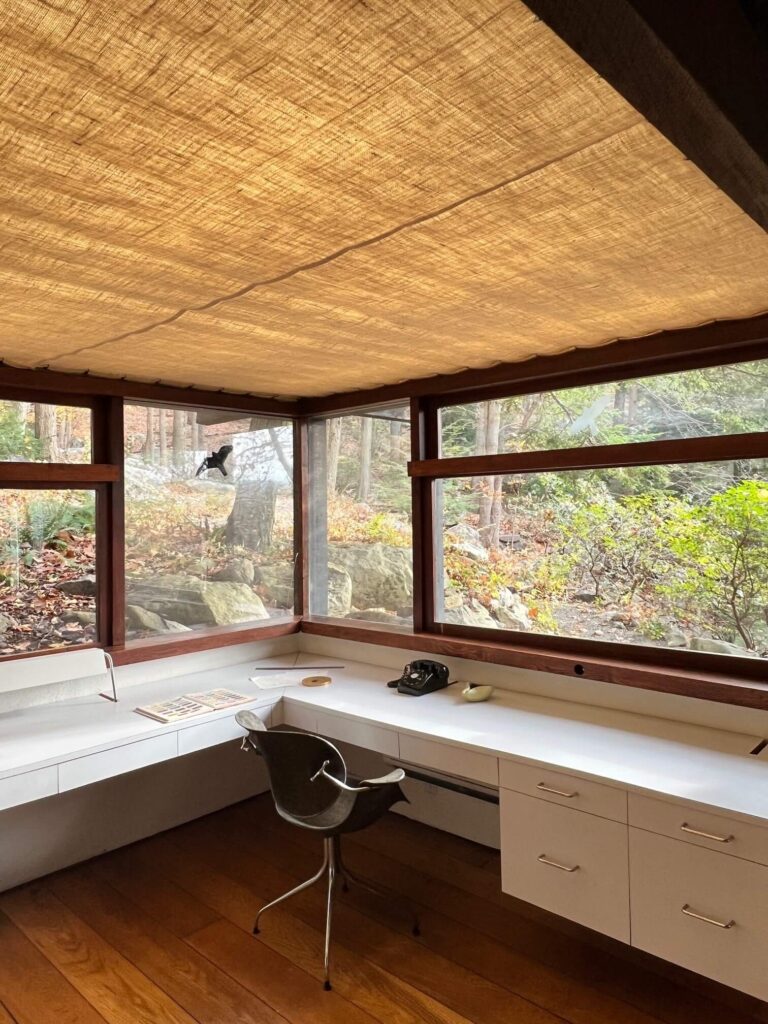
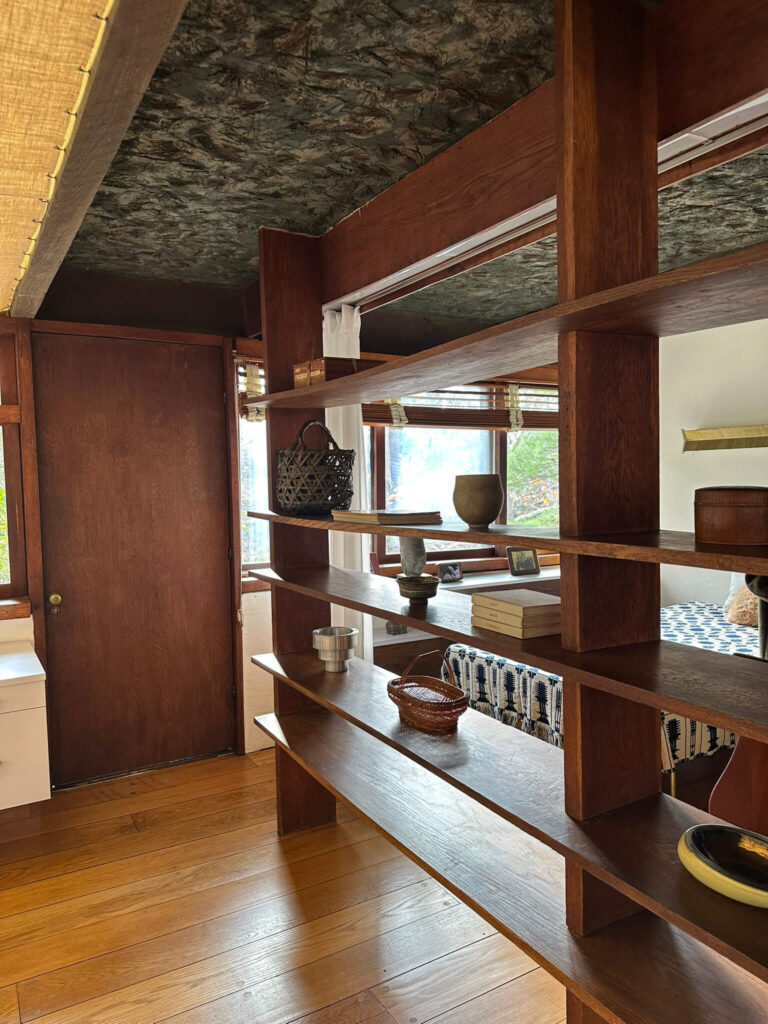
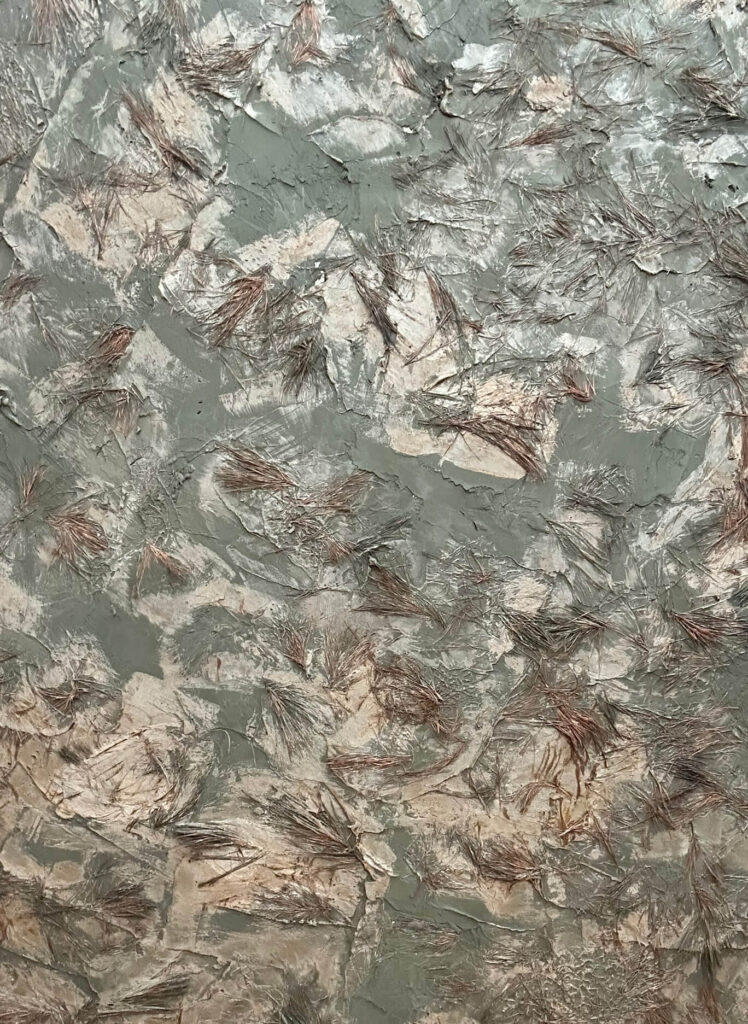
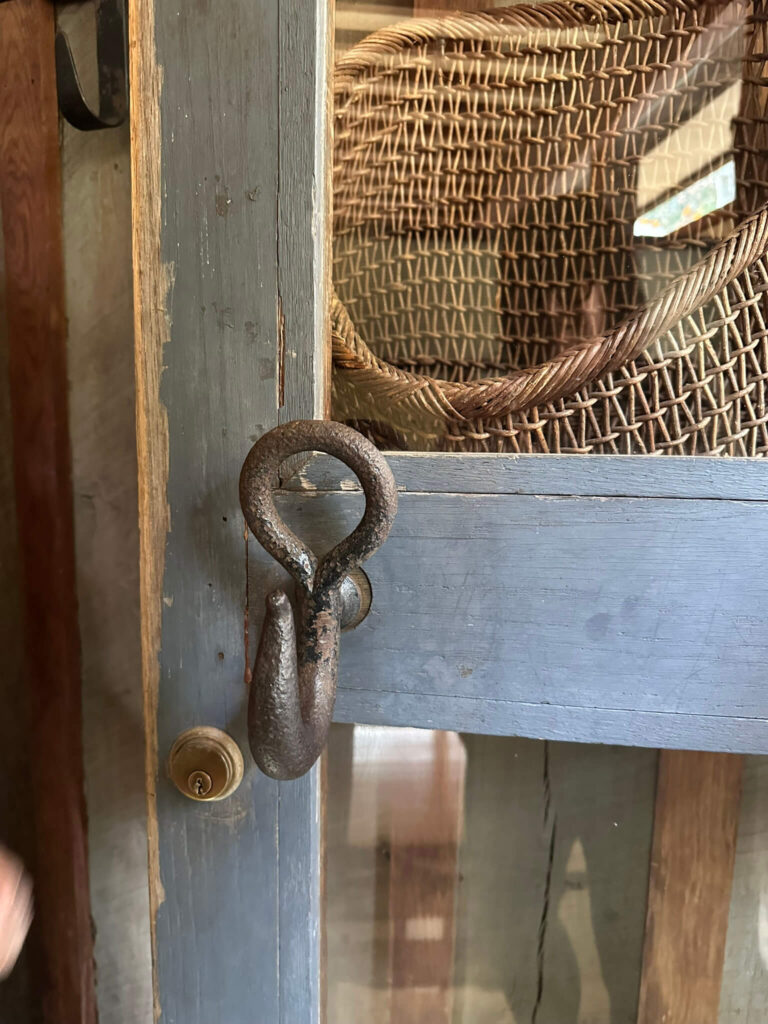
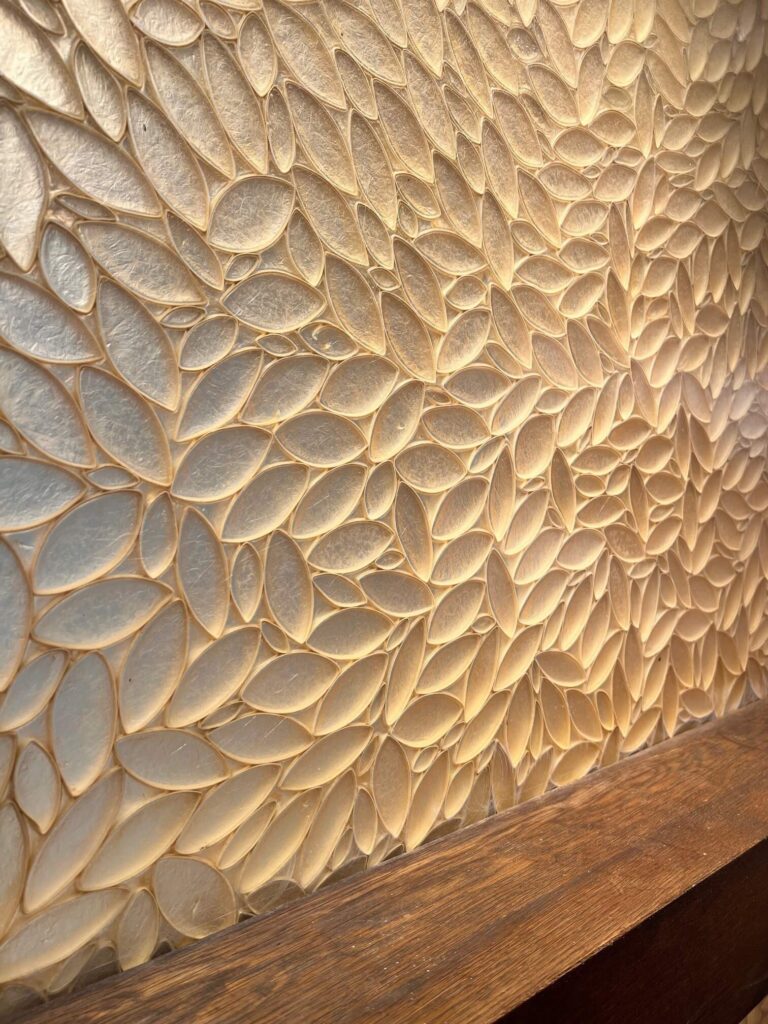
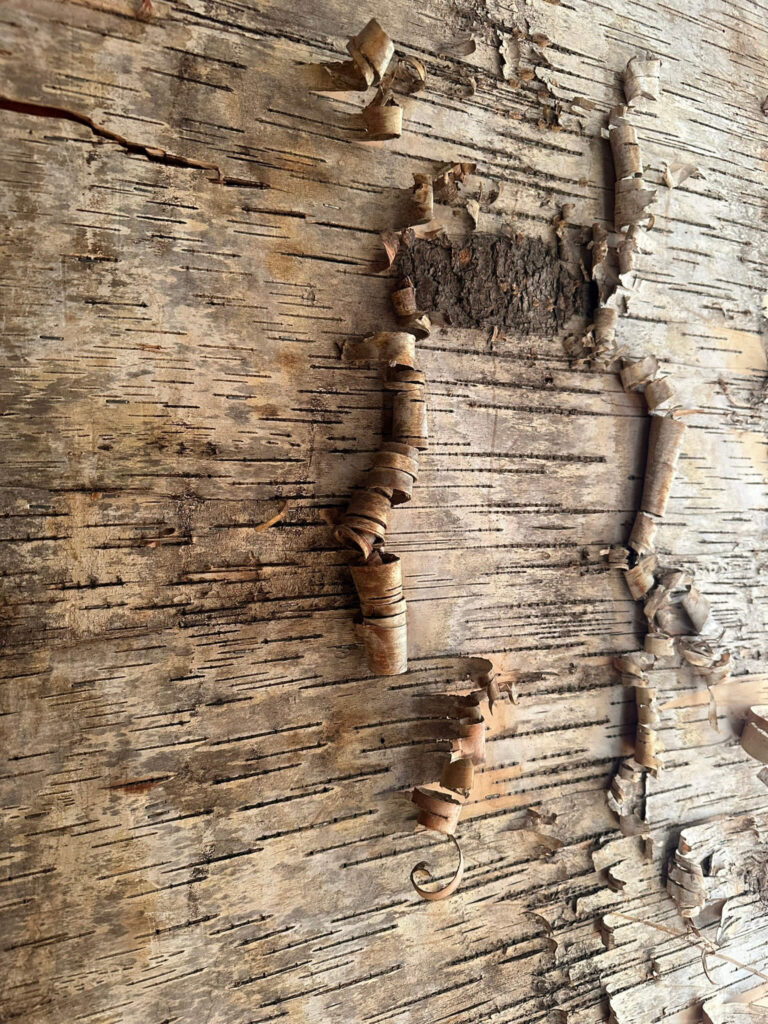
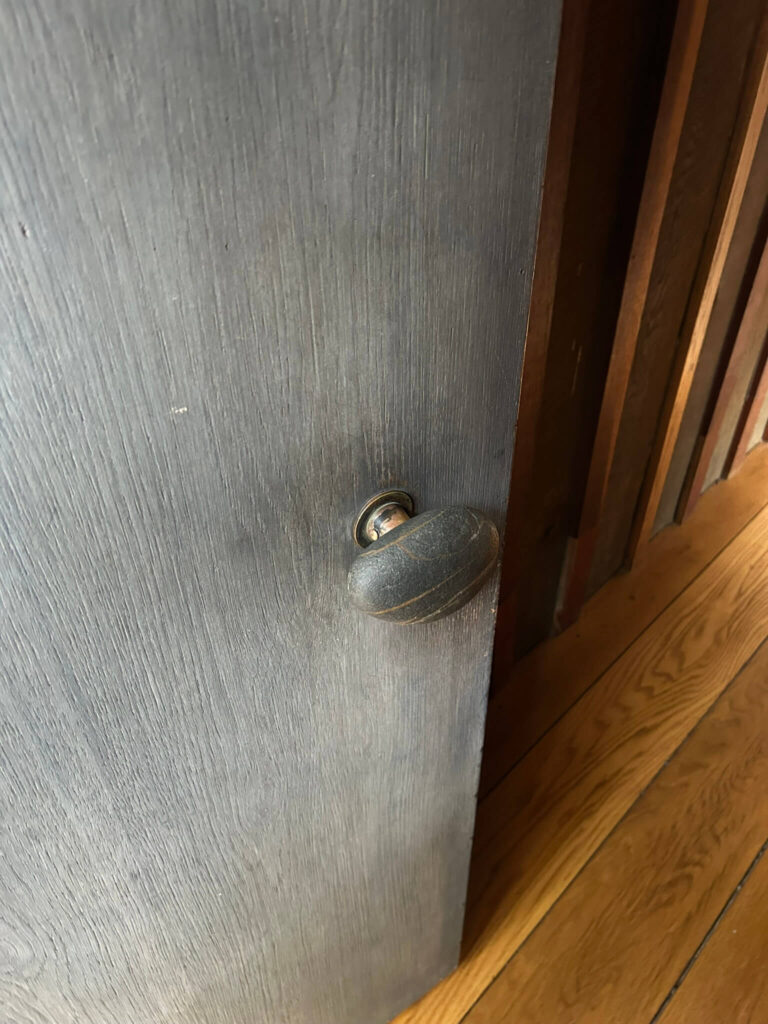
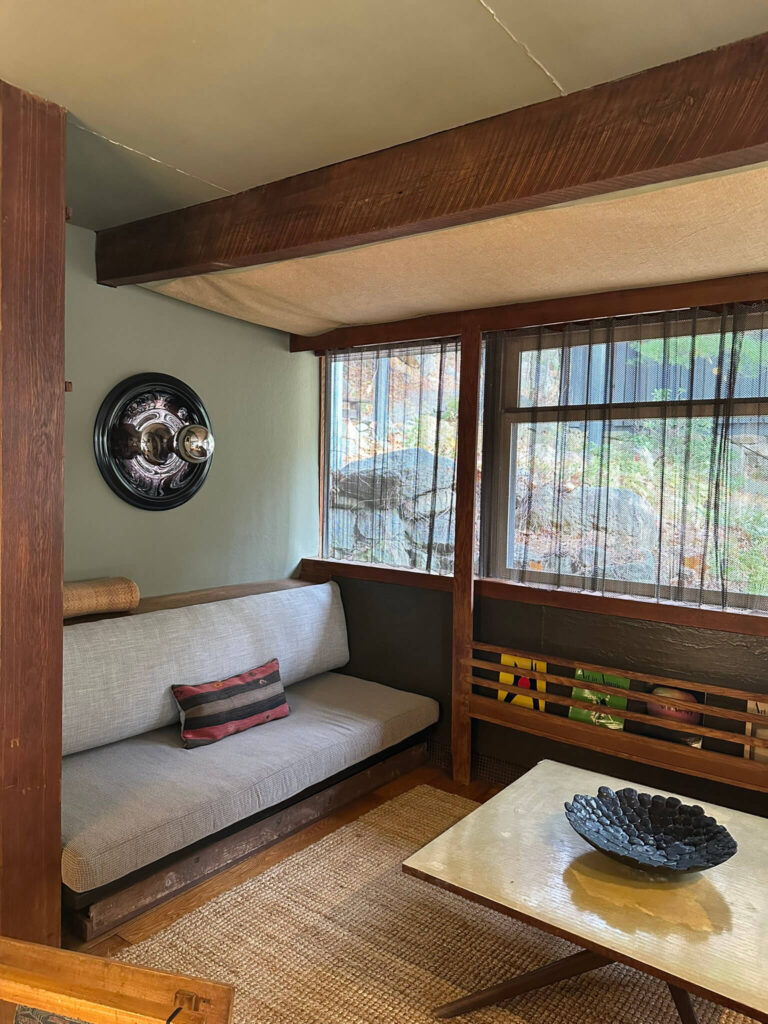
In the studio, where Russel Wright worked and slept, half of the space is dedicated to a office area, with a wrap-around Formica desk and a Herman Miller chair. A rotary telephone and an ashtray make you feel like it was not so long away that Mr. Wright was there, drafting designs of dinnerware and teapots. The other half of the studio space is a sleeping area with a simple bed and side table. Interior details like doorknobs made from quarry finds and rare, handmade surfaces illustrate the individuality of Dragon Rock and the focus of bringing nature indoors. Pine needles are embedded in plaster for walls, golden-colored honeycomb is pressed between glass, and cardboard rolls are pinched to create leaf-like shapes in a translucent panel. Japanese design also had an influence on the Dragon Rock, evident in the illuminated canvas panel ceiling, open wood shelving, and the warm minimalism of the rooms.
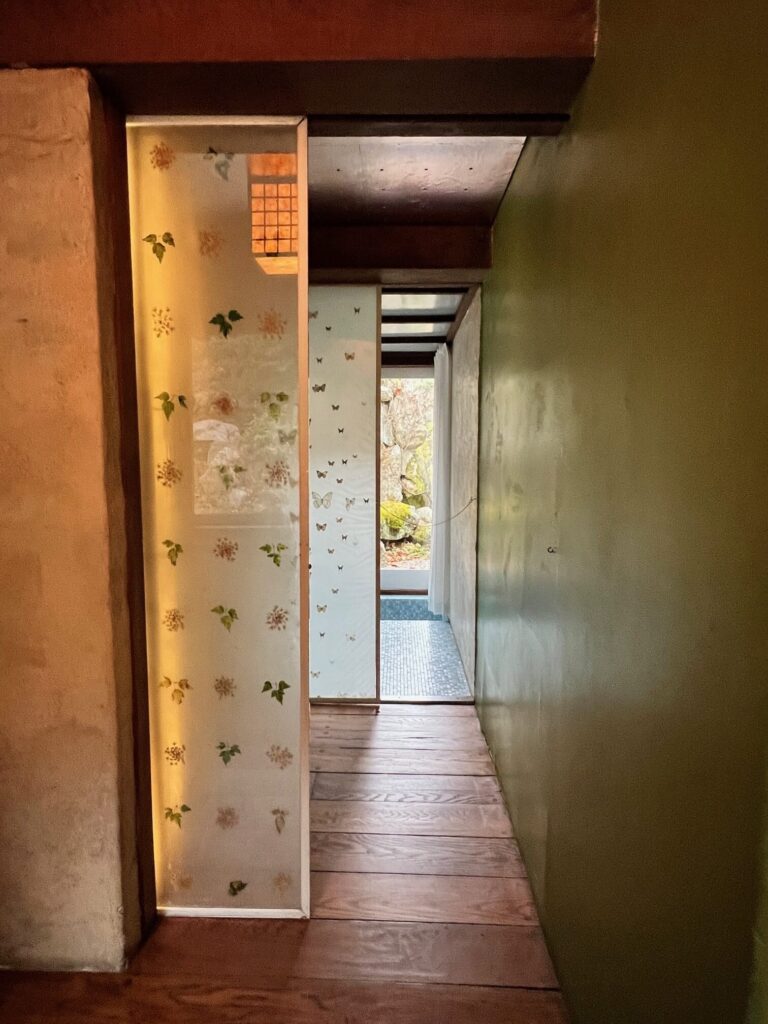
Beyond the studio, the house includes an upper and lower level where the family lived and entertained. From room to room, unique elements underscore Russel Wright’s objective that Dragon Rock was to be an “exaggerated demonstration of how individual a house can be.” Daughter Anne’s bathroom is considered an important space in the home—a representation of her childhood at Manitoga combined with her father’s creative vision. Immediately catching one’s eye as they pass through this the corridor on approach to the bathroom are translucent panels with pressed flowers and butterflies that lend a soft, whimsical glow to the space. Just beyond, glass tiles (originally Murano) color the floor in shades of blue, green and gray. These were also used in the bathtub which was fed by a cascade of water that flowed down an interior boulder wall, imitating the waterfall at the quarry pool just outside.
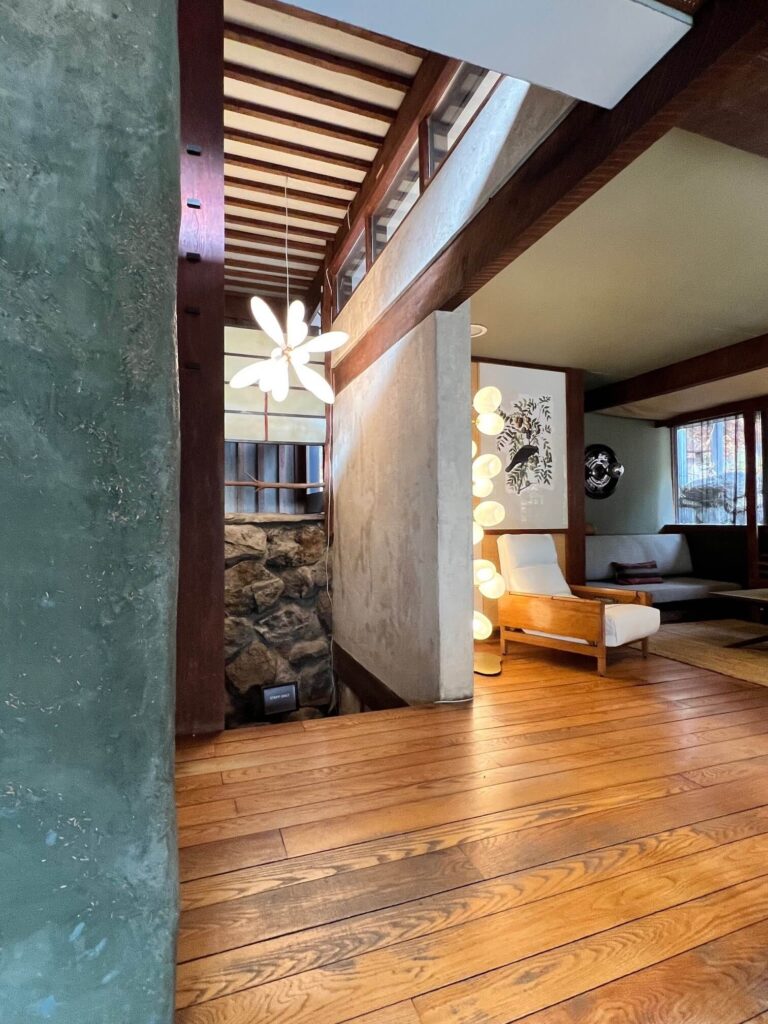
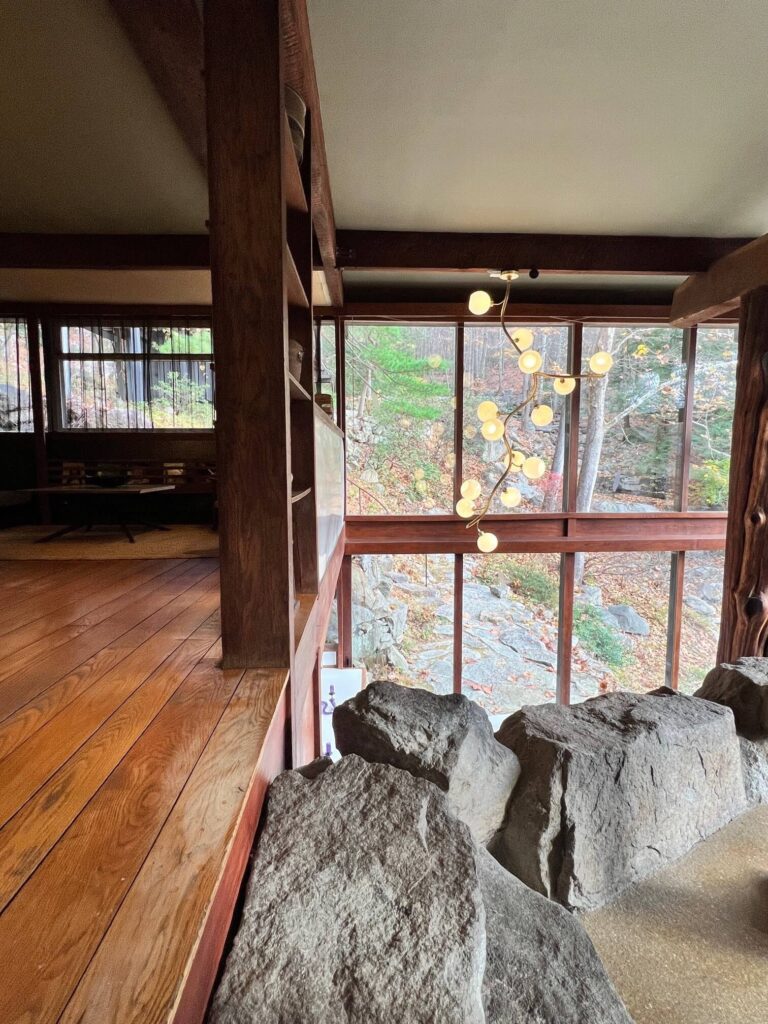
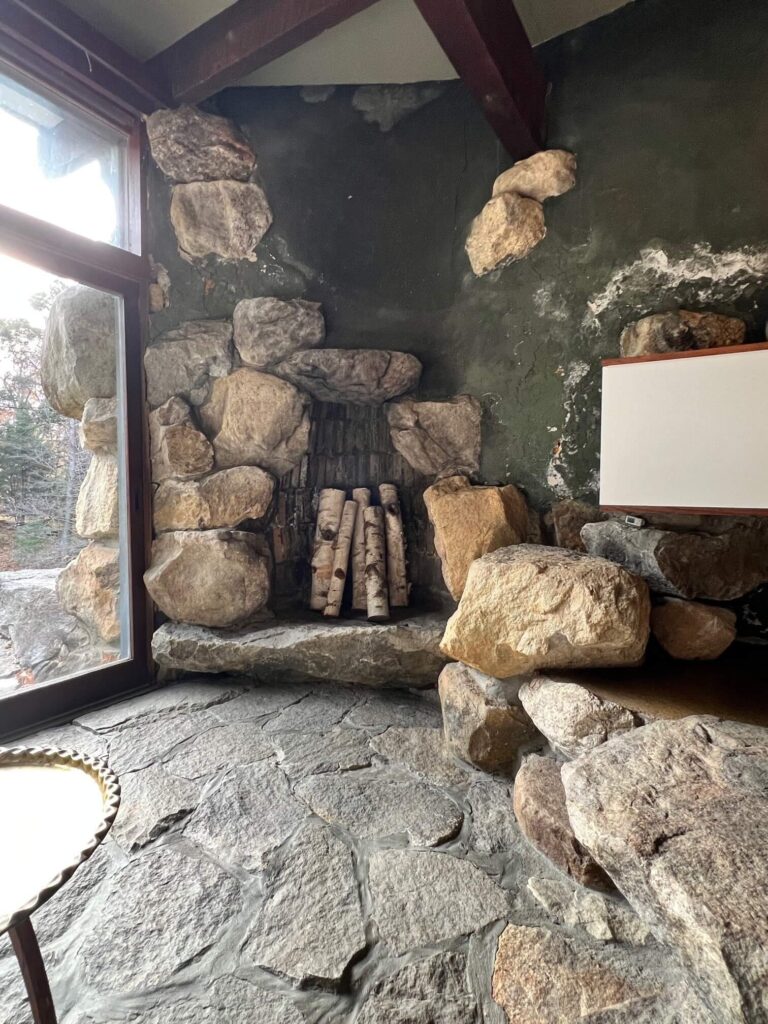
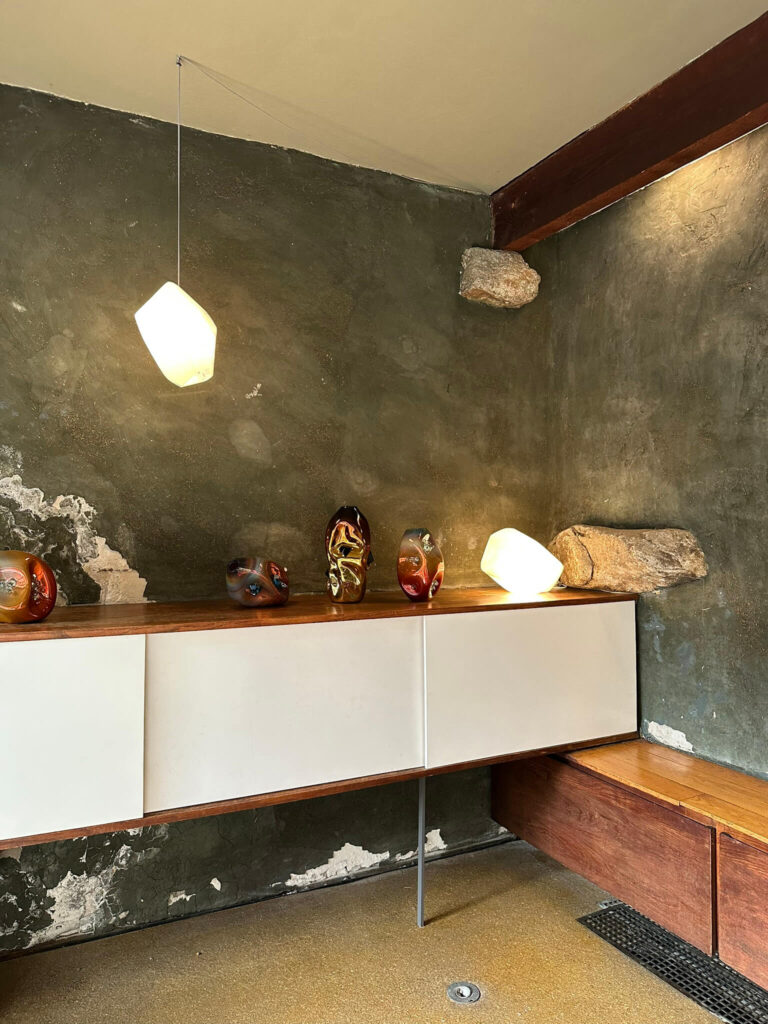
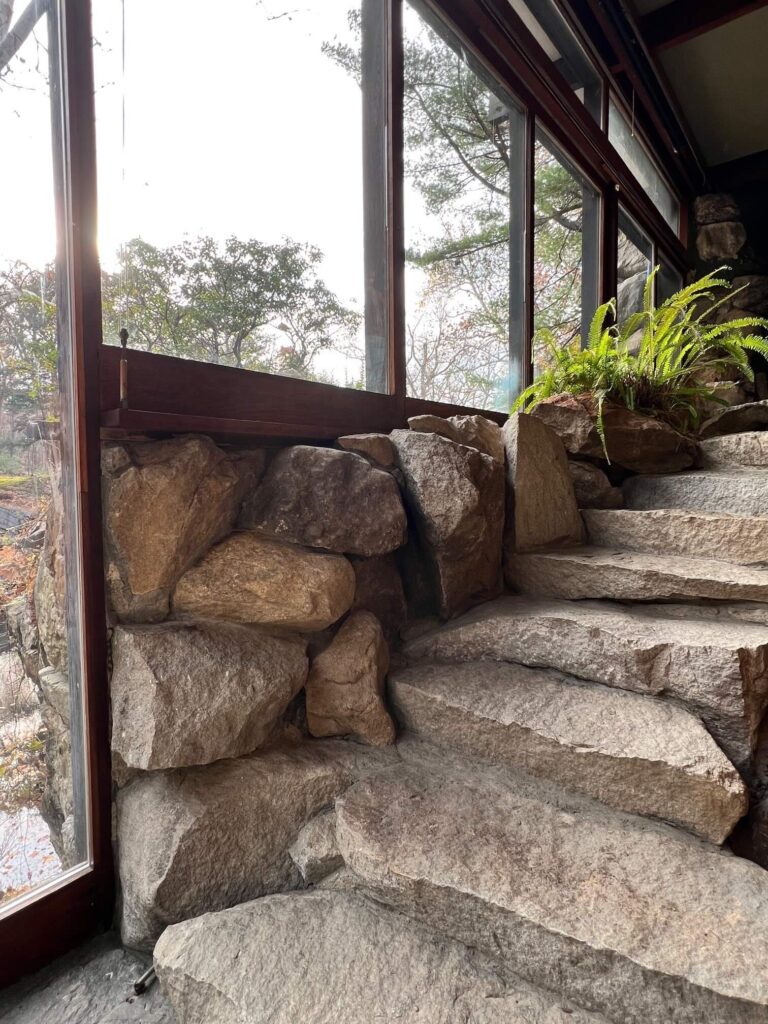
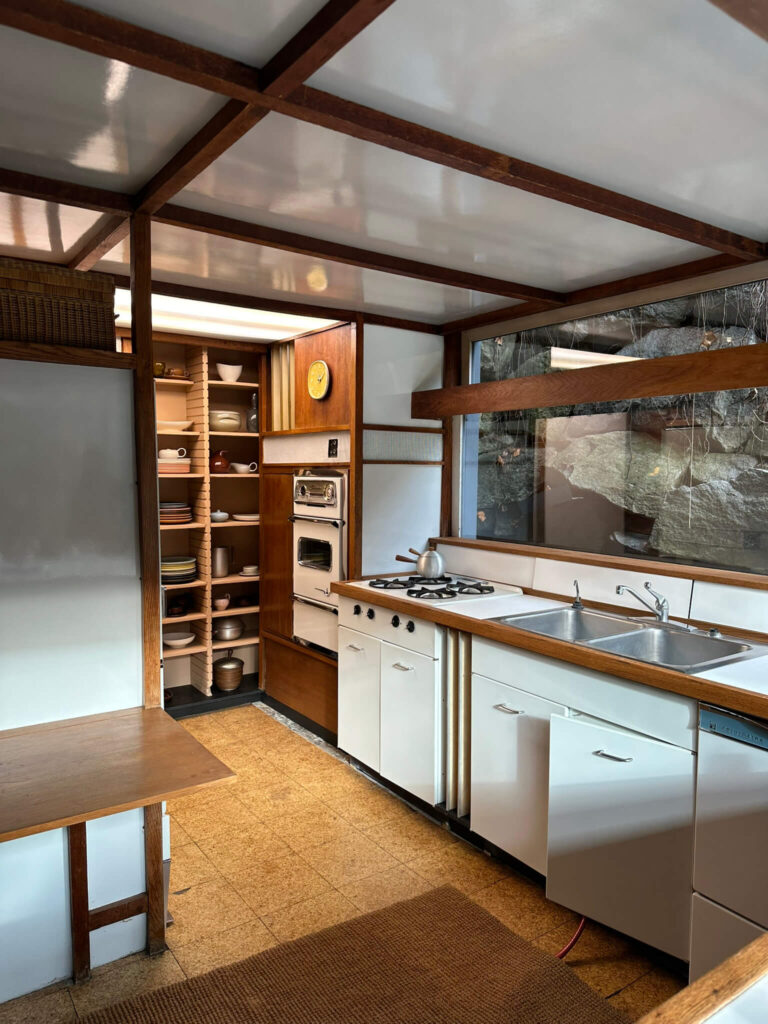
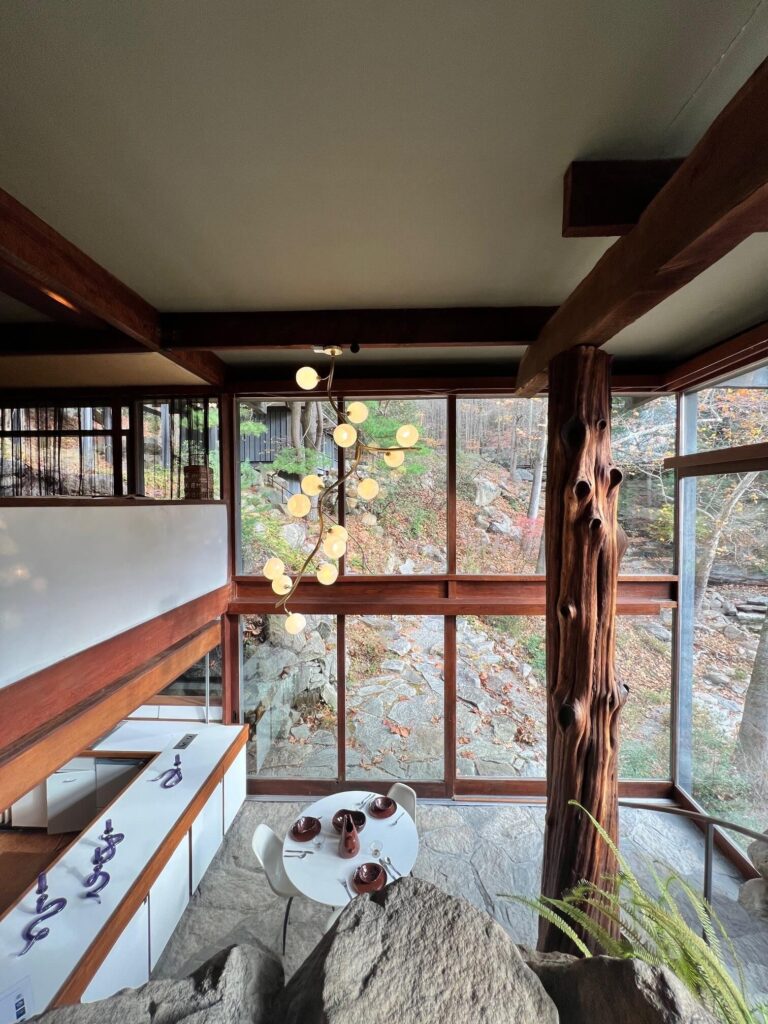
On the lower level, the theme of the natural environment and Russel Wright’s pursuit of living in harmony with it is the most evident. Stacked boulders create walls, cut rocks form a staircase within the open-plan living area, and a cedar tree trunk stands at the center of the floor in the dining room furnished with a Saarinen Tulip table. On the other side of a counter, a simple kitchen remains intact, with vintage appliances and a cabinet stocked with Russel Wright dinnerware. Expansive windows on two sides of this kitchen/dining/living area provide an abundance of light and a view of the surrounding woodland garden. At the time of our visit, Jeff Zimmerman’s illuminated light sculpture Vine was suspended from the double-height ceiling above the dining table. Throughout the space and elsewhere throughout the house, various other works of his, which can be described as elegant interpretations of organic forms, were on display, including several from his Crumpled Vessel and Salt Crystal series, along with Serpentine candle holders and a Murrine Cluster light sculpture. As many of MR projects include both architectural and decorative scopes, seeing Jeff Zimmerman’s pieces against the backdrop of the Dragon Rock’s modern architecture and natural, rough-hewn finishes offered a welcome dose of inspiration.
The last space we visited was the Design Gallery, located in a converted bedroom wing of the house and home to the permanent collection of Wright designs including early spun aluminum bar accessories, the Steubenville American Modern line of dishware, flatware, glassware, clocks and textiles. A tour through the space takes visitors on a journey through Russel and Mary’s history working together beginning in the late 1920s and creating what would come to be known as the best-selling American designs for the table—collections that modernized the American home. Browsing through the extensive assortment of wares in modern organic shapes in bright, nature-inspired colors—teapots, platters, serving spoons, gravy boats, cordial glasses, vases, coffee creamers—we asked one another, “If you could have one thing here, what would it be?” As we perused the sweeping displays, narrowing it down to just one thing did not come easily for any of us.